
Social appropriation of law 2268 of 2022 through playful tools: educational strategies for artisanal fishermen in Tumaco and Buenaventura
DOI:
https://doi.org/10.25268/bimc.invemar.2025.54.2.1347Keywords:
Social appropriation of knowledge, Law 2268, fishing communities, , ludic methodology, participatory action researchAbstract
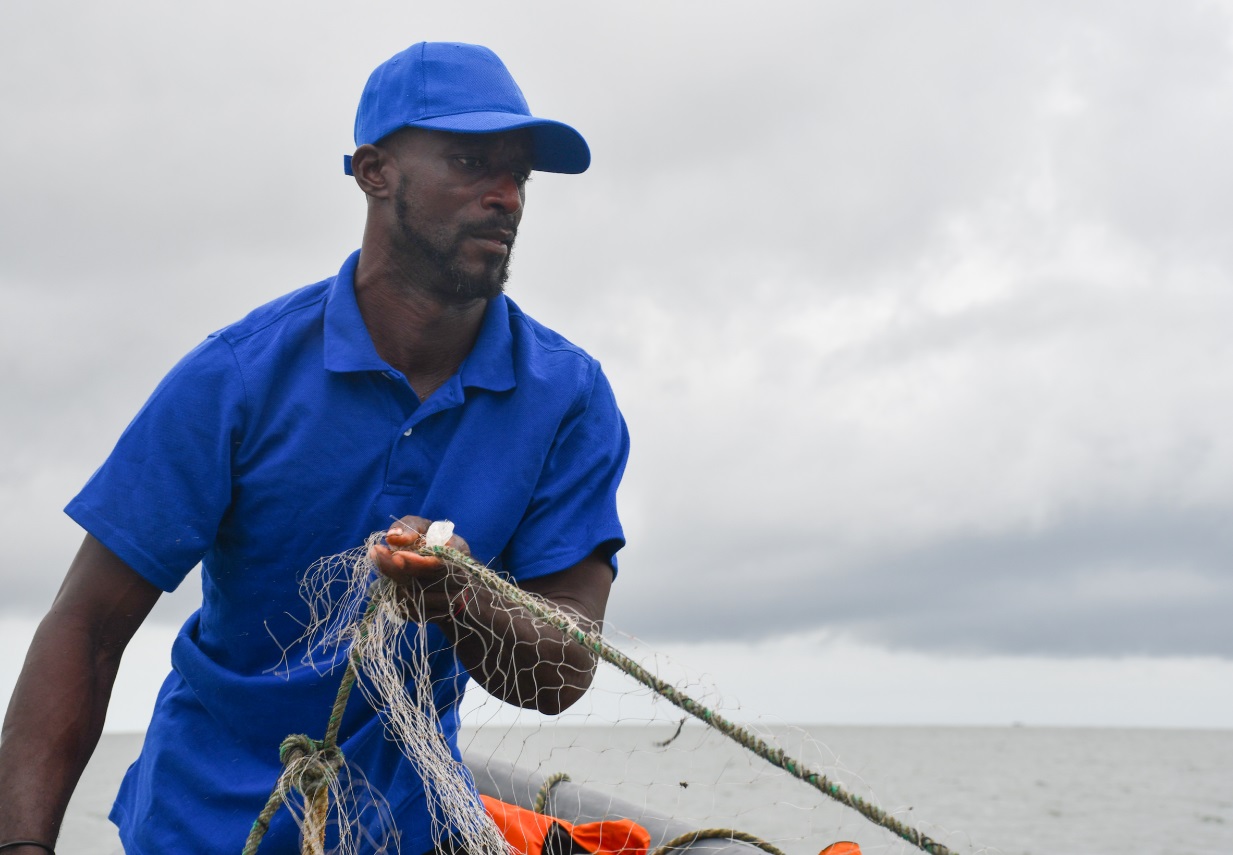
Rural communities face significant barriers in accessing and understanding the content of laws; in order to help overcoming these barriers, participatory workshops were conducted based on the creation of educational games that simplified legal concepts and promoted greater understanding and applicability of the regulations. This paper analyzes the process of social appropriation of Law 2268 of 2022 in artisanal fishing communities in Tumaco and Buenaventura by using playful activities as an educational tool. The methodological approach combines participatory action research and people-centred design, which allowed the co-creation of 14 playful prototypes adapted to the socio-economic and cultural realities of the fishermen. The results showed that the played activities facilitated collaborative learning, overcame language and literacy barriers, and generated greater acceptance of Law 2268 in the communities. Despite the challenges faced, such as widespread ignorance of the law, lack of access to information and resistance to change, the play-based approach proved to be an effective strategy for promoting the social appropriation of knowledge. This study suggests that play-based methods can be replicated in other rural contexts and with different legislation to promote community participation and empowerment.
References
Autoridad Nacional de Acuicultura y Pesca AUNAP y Programa de las Naciones Unidas para el Desarrollo PNUD. (2019). Caracterización, formalización y fortalecimiento asociativo de los pescadores artesanales marítimos del Caribe, Pacífico e Insular y pescadores artesanales continentales del área de influencia de Hidroituango en Colombia. Bogotá: AUNAP y PNUD. p 299.
Barsky, R.F. (1991). Language and symbolic power. Modern Language Quarterly, 52(4), pp 466-468. https://doi.org/10.1215/00267929-52-4-466
Bourdieu, P. (1991). Language and Symbolic Power. Cambridge, MA: Harvard University Press.
Buendía, P. (2018). Acceso a la justicia y necesidades jurídicas de las poblaciones rurales en Colombia. Tesis de maestría. Universidad de los Andes. hdl.handle/net/1992/34706
Buraschi, D., y Aguilar, M. (2019). Empoderamiento comunicacional: Una estrategia de intervención comunitaria para superar los límites de la sensibilización social. Revista de Educación Social. No. 29.
Caillois, R. (2001). Man, play, and games. Illinois: University of Illinois Press. Canale, M., y Swain, M. (1980). Theoretical bases of communicative approaches to second language teaching and testing. Oxford: Applied Linguistics.
Carroll, D. (2017). Legal Deserts: A Multi-State Perspective on Rural Access to Justice. Harvard Law & Policy Review, 11(1), pp 15-45.
Chingaté Hernández, I. N., (2008). Democratización del conocimiento científico tecnológico en Colombia. Papel Político. 14(2), pp 393–408.
Chomsky, N. (1957). Syntactic Structures. 2nd ed. Scribd. Berlín: Mouton de Gruyter.
Chomsky, N. (1999). Aspectos de la teoría de la sintaxis. Barcelona: Gedisa Editorial.
Congreso de Colombia, (2022). Por medio de la cual se expiden normas para garantizar beneficios sociales focalizados a los pescadores artesanales comerciales y de subsistencia
Ley Nº 2268, 22 de agosto.
Departamento Nacional de Estadísticas - DANE (2022). Indicadores de necesidades básicas insatisfechas (NBI), según recientes agregaciones territoriales. [online] Dane.gov.co. Disponible en: https://www.dane.gov.co/index.php/estadisticas-por-tema/pobreza-y-condiciones-de-vida/necesidades-basicas-insatisfechas-nbi.
Escobar, A. (2019). Autonomía y diseño: La realización de lo comunal. Popayán: Universidad del Cauca. https://doi.org/10.2307/j.ctvpv50jd.
Flanagan, M. (2013). Critical play: Radical game design. Cambridge: MIT Press.Frissen, V. (2015). Playful identities: The ludification of digital media cultures. Amsterdam: Amsterdam University Press. Gumperz, J. (1994). Discourse strategies. Cambridge: Cambridge University Press.
Huizinga, J. (1980). Homo ludens: A study of the play-element in culture. London : Routledge & Kegan Paul. Hymes, D. (1972). On Communicative Competence. London: Penguin Books.
IDEO. (2015). The field guide to human-centered design. Canadá: IDEO.
IDEO. (2011). Human-centered design: Toolkit. Nueva York: IDEO.
Kolb, D. (1984). Experimental learning: Experience as the source of learning and development. New York: Prentice-Hall.
Latorre, A. (2010). La investigación-acción: Conocer y cambiar la práctica educativa. Barcelona: Graó.
Manzini, E. (2015). Design, when everybody designs: An introduction to design for social innovation. Cambridge: The MIT Press.
Marín, S. (2012). Apropiación social del conocimiento: Una nueva dimensión de los archivos. Medellín: Universidad de Antioquia.
Ministerio de Ciencias, Tecnología e Innovación - MinCiencias. (2021). Política Pública de Apropiación Social del Conocimiento en el marco de la CTeI. Bogotá: MinCiencias.
Ministerio de Educación - MinEducación. (2022). Cobertura de educación por municipio en Colombia. Bogotá: Ministerio de Educación. Recuperado de: https://terridata.dnp.gov.co/index-app.html#/comparaciones.
Newman, D. and Gordon, F., (2023). Access to justice in rural communities: Global Perspectives. London: Bloomsbury Publishing.
Pruitt, L. R. and Showman, A. (2014). Law stretched thin: acccess to justice in rural America. South Dakota Law Review, 59(3), pp 466-499.
Selvaraj, J.J., Guerrero, D., Cifuentes-Ossa, M.A and Guzmán-Alvis, A.I. (2022). The economic vulnerability of fishing households to climate change in the south Pacific región of Colombia. Heliyon 8(5) e09425 doi.org/10.1016/j.heliyon.2022.e09425
Tapia, A., Melecio, Y. y Contreras, Z. (2017). La lúdica como herramienta para el aprendizaje. Tesis. Universidad Pontificia Bolivariana, Puerto Asís.
Taranilla, R. (2012). La enseñanza de habilidades comunicativas para la práctica del derecho: La técnica narrativa en contextos judiciales. Barcelona: Editorial Jurídica.
Tiersma, P. M. (1999). Legal Language. Chicago: University of Chicago Press.
Vásquez, G., y Azahuanche, M. A. P. (2020). Estrategias lúdicas para la comprensión de textos en estudiantes de educación primaria. IE Revista de Investigación Educativa de
la REDIECH, 11, e805. https://doi.org/10.33010/ie_rie_rediech.v11i0.805
Venegas, G., Proaño, C., Castro, S., y Tello, G. (2021). Actividades lúdicas para el mejoramiento de la lectura compresiva en estudiantes de educación básica. Horizontes. Revista de Investigación en Ciencias de la Educación, 5(18), pp 502–514. https://doi.org/10.33996/revistahorizontes.v5i18.191
Zariski, A. (2014). Legal literacy: an introduction to legal studies. Edmonton: Athabasca University Press.
Downloads
Published
Issue
Section
License
Copyright (c) 2025 Daniel Guerrero Bedoya, Lady Roa, Yesid Benítez

This work is licensed under a Creative Commons Attribution-NonCommercial-ShareAlike 4.0 International License.