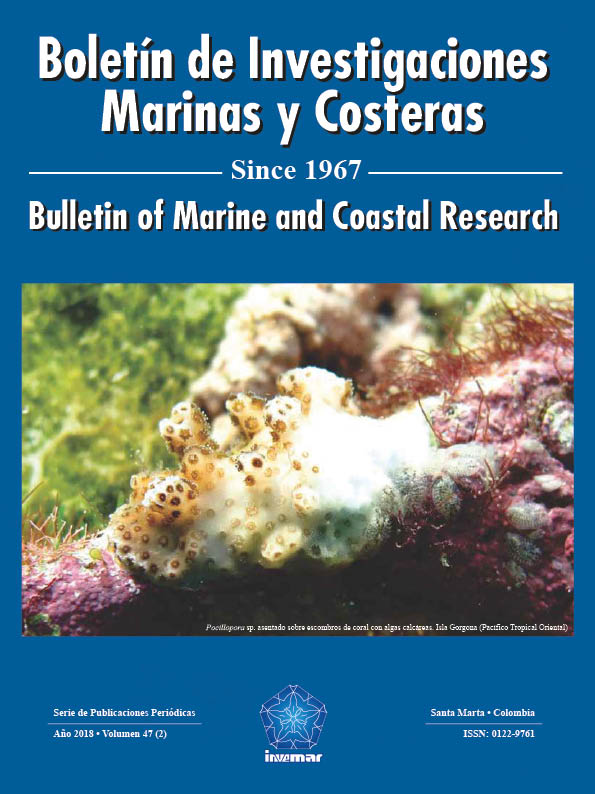
Evidencia de reclutamiento coralino producto de reproducción sexual, en Isla Gorgona, Pacífico Tropical Oriental
DOI:
https://doi.org/10.25268/bimc.invemar.2018.47.2.749Palabras clave:
Asentamiento coralino, Reclutamiento sexual, Corales juveniles, Pocillopora, PoritesResumen
Se presenta evidencia de reclutamiento coralino de origen sexual, el cual ha sido típicamente bajo en la región del Pacífico Tropical Oriental, en diferentes arrecifes coralinos y sitios rocosos de isla Gorgona, Colombia, y por primera vez para el Pacífico colombiano. Mediante un examen minucioso de sustratos naturales, encontramos reclutas de coral de al menos diez especies, en diez de 19 sitios alrededor de la isla durante exploraciones de buceo entre los años 2010 y 2017, pero no se encontraron reclutas adheridos a placas de asentamiento de cinco materiales diferentes instaladas en uno de los arrecifes. Las dos especies de coral con juveniles más abundantes fueron Porites panamensis y Pocillopora sp., con densidades promedio de 5.7 ± 4.7 y 0.07 ± 0.11 colonias m-2 (± DE), respectivamente; y con tamaños promedio de 2.3 ± 0.9 cm y 3.5 ± 1.0 cm (± DE), respectivamente. Estos resultados indican que, aunque las placas de asentamiento no son tan útiles para estudiar el reclutamiento de coral en esta región como sí lo han sido en otros lugares del mundo, el
reclutamiento coralino derivado de la reproducción sexual de un conjunto diverso de especies sí es un proceso activo en la isla.