Microfitoplancton a lo largo del Pacífico sudoriental y al norte dela península Antártica Occidental, verano austral 2023-2024
DOI:
https://doi.org/10.25268/bimc.invemar.2026.55.2.1419Palabras clave:
Microfitoplancton, Península Antártica Occidental, biomasa de carbono, variabilidad espacial, El NiñoResumen
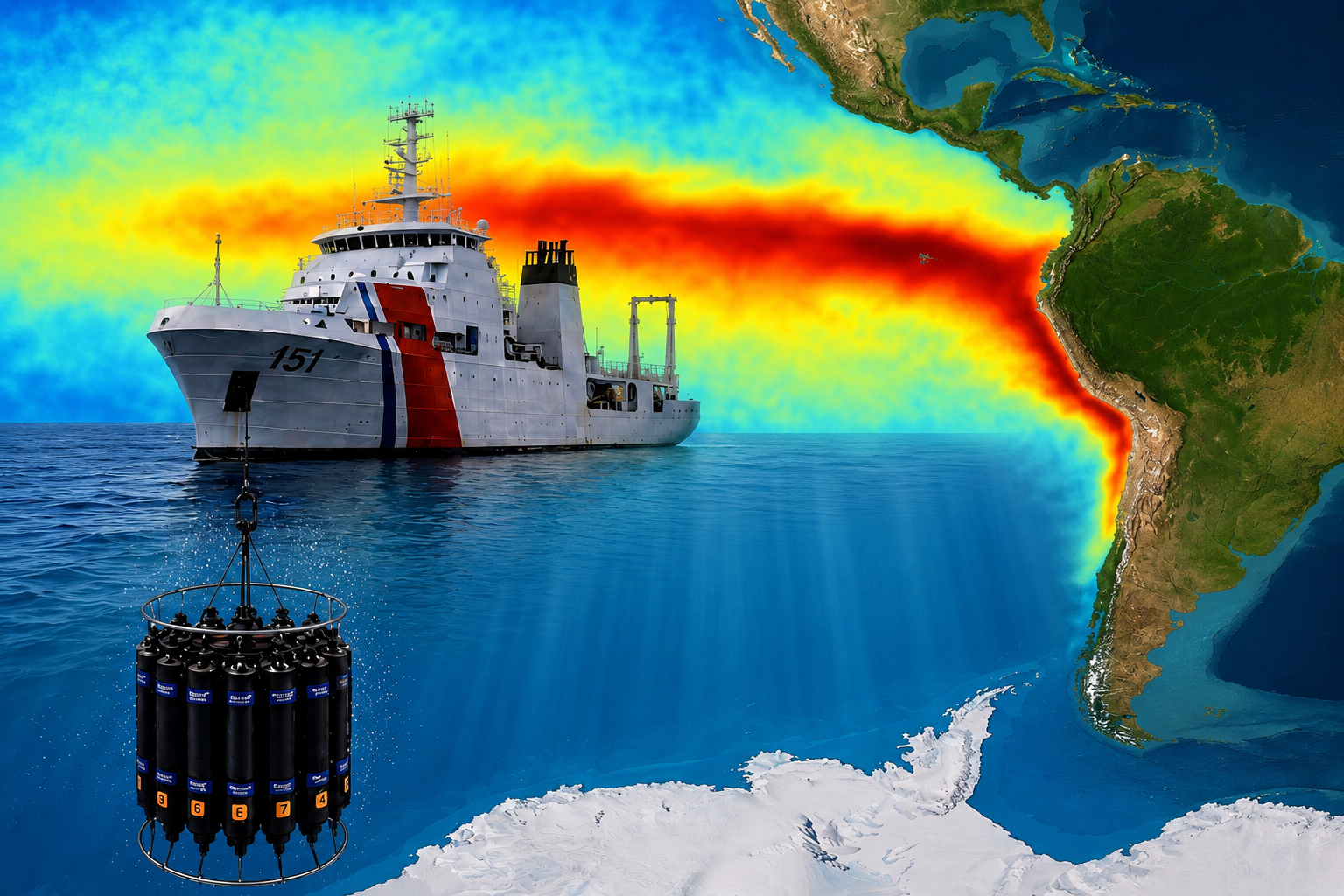
El fitoplancton constituye un componente clave de las redes tróficas marinas y del ciclo global del carbono, con un papel relevante en regiones polares y de transición oceánica; sin embargo, la variabilidad del ensamblaje microfitoplanctónico a lo largo de gradientes de gran
escala que conectan el océano abierto con la península Antártica Occidental (PAO) sigue siendo poco documentada. Durante el verano austral 2023-2024 se evaluaron los cambios en la composición, densidad y biomasa de carbono del microfitoplancton a lo largo del Pacífico sudoriental y en el norte de la PAO. La mayor densidad y biomasa se registraron en el Pacífico
sudoriental (620 cél. L–¹ y 1,78 μg C L–¹), dominada por dinoflagelados tecados de 20–50 μm, mientras que la PAO presentó valores inferiores (170 cél. L–¹ y 0,10 μg C L–¹), con predominio de diatomeas céntricas y dinoflagelados atecados de 20–30 μm. Ambos sectores presentaron valores bajos de densidad y biomasa, lo que coincidió con el evento El Niño 2023-2024. En conjunto, los resultados evidencian una marcada variabilidad espacial del microfitoplancton entre ambientes oceánicos y polares y aportan una línea base para futuros estudios sobre su respuesta a la variabilidad climática.
Referencias
Annett, A.L., Carson, D.S., Crosta, X., Clarke, A. and Ganeshram, R.S. (2010). Seasonal progression of diatom assemblages in surface waters of Ryder Bay, Antarctica. Polar Biology, 33(1), pp. 13–29. doi: https://doi.org/10.1007/s00300-009-0681-7
Antoni, J.S., Almandoz, G.O., Ferrario, M.E., Hernando, M.P., Varela, D.E., Rozema, P.D., Buma, A.G.J., Paparazzo, F.E. and Schloss, I.R. (2020). Response of a natural Antarctic phytoplankton assemblage to changes in temperature and salinity. Journal of Experimental Marine Biology and Ecology, 532, pp. 151444–151444. doi: https://doi.org/10.1016/j.jembe.2020.151444
Balech, E. 1975. Clave ilustrada de dinoflagelados antárticos. Publicación IAA No. 11. Buenos Aires: Instituto Antártico Argentino, Dirección Nacional del Antártico, pp. 1–99.
Cañón, M. and Santamaría, E. (2021). Identification of phytoplankton blooms in the Gerlache Strait, West Antarctic Peninsula. Boletín de Investigaciones Marinas y Costeras, 50(SuplEsp), pp. 13–30. doi: https://doi.org/10.25268/bimc.invemar.2021.50.suplesp.922
Chisholm, S.W. (1992). Phytoplankton Size, in Falkowski, P.G., Woodhead, A.D. and Vivirito, K. (eds.) Primary Productivity and Biogeochemical Cycles in the Sea. Boston, MA: Springer eBooks, 43, pp. 213–237. doi: https://doi.org/10.1007/978-1-4899-0762-2_12
Clarke, K.R. and Warwick, R.M. (2001) Change in Marine Communities: An Approach to Statistical Analysis and Interpretation. 2nd edn. Plymouth: PRIMER-E Ltd, Plymouth Marine Laboratory.
Costa, R.R., Mendes, C.R.B., Ferreira, A., Tavano, V.M., Dotto, T.S. and Secchi, E.R. (2021). Large diatom bloom off the Antarctic Peninsula during cool conditions associated with the 2015/2016 El Niño. Communications Earth & Environment, [online] 2(1), pp. 1–11. doi: https://doi.org/10.1038/s43247-021-00322-4
De La Hoz-Barrientos, L.A., Cañón, M.L. and Rojas, D. (2020). Estructura y distribución de la comunidad microfitoplanctónica a lo largo del estrecho de Gerlache durante el verano austral 2018-2019. Boletín Científico CIOH, 39(1), pp. 13–22. doi: https://doi.org/10.26640/22159045.2020.501
Delgado, E., Sánchez, S., Chang, F., Villanueva, P. and Fernández, C. (2015) Fitoplancton del mar peruano en la primavera austral 2002. Informe IMARPE, 42(2), pp. 143–149.
Falkowski, P.G. (2004). The evolution of modern eukaryotic phytoplankton. Science, [online] 305(5682), pp. 354–360. doi: https://doi.org/10.1126/science.1095964
Falkowski, P.G. and Raven, J.A. (1998). Aquatic photosynthesis. Journal of Experimental Botany, 49(320), pp. 621–621. doi: https://doi.org/10.1093/jxb/49.320.621
Ferrario, M.E., Sar, E.A., Godoi, S.S. and Garibotti, I.A. (2008) Species of Coscinodiscus (Bacillariophyta) from the Gulf of Mexico, Argentina and Antarctic waters: morphology and distribution, Nova Hedwigia, Beiheft 133, pp. 187–216.
Figueroa, F.L. (2002). Bio-optical characteristics of Gerlache and Bransfield Strait waters during an Antarctic summer cruise. Deep Sea Research Part II: Topical Studies in Oceanography, 49(4-5), pp. 675–691. doi: https://doi.org/10.1016/s0967-0645(01)00118-7
Gardiner, W., Rushing, A.E. and Dawes, C.J. (1989). Ultrastructural observations of Gyrodinium estuariale (dinophyceae)1. Journal of Phycology, 25(1), pp. 178–183. doi: https://doi.org/10.1111/j.0022-3646.1989.00178.x
Garibotti, I.A., Vernet, M., Ferrario, M., Smith, R., Ross, R. and Quetin, L. (2003). Phytoplankton spatial distribution patterns along the western Antarctic Peninsula (Southern Ocean). Marine Ecology Progress Series, 261, pp. 21–39. doi: https://doi.org/10.3354/meps261021
Garibotti, I.A., Vernet, M. and Ferrario, M.E. (2005). Annually recurrent phytoplanktonic assemblages during summer in the seasonal ice zone west of the Antarctic Peninsula (Southern Ocean). Deep Sea Research Part I: Oceanographic Research Papers, 52(10), pp. 1823–1841. doi: https://doi.org/10.1016/j.dsr.2005.05.003
Gómez, F. (2021). Speciation and infrageneric classification in the planktonic dinoflagellate Tripos (Gonyaulacales, Dinophyceae). Current Chinese Science, 1(3), pp. 346–372. doi: https://doi.org/10.2174/2210298101999210101231020
Gómez, F., Claustre, H., Raimbault, P. and Souissi, S. (2007) Two high-nutrient low-chlorophyll phytoplankton assemblages: the tropical central Pacific and the offshore Peru-Chile current, Biogeosciences, 4, pp. 1101–1113. doi: https://doi.org/10.5194/bg-4-1101-2007
Gómez, F., Claustre, H. and Souissi, S. (2008). Rarely reported dinoflagellates of the genera Ceratium, Gloeodinium, Histioneis, Oxytoxum and Prorocentrum (Dinophyceae) from the open southeast Pacific Ocean. Revista de Biología Marina y Oceanografía, 43(1), pp. 25–40. doi: https://doi.org/10.4067/s0718-19572008000100004
Gómez, F., Moreira, D. and López-García, P. (2010). Molecular phylogeny of the dinoflagellates Podolampas and Blepharocysta (Peridiniales, Dinophyceae). Phycologia, 49(3), pp. 212–220. doi: https://doi.org/10.2216/ph09-29.1
Grados, C., Chaigneau, A., Echevin, V. and Dominguez, N. (2018). Upper ocean hydrology of the Northern Humboldt Current System at seasonal, interannual and interdecadal scales. Progress in Oceanography, 165, pp. 123–144. doi: https://doi.org/10.1016/j.pocean.2018.05.005
Gutiérrez, D., Aronés, K., Chang, F., Quipúzcoa, L. and Villanueva, P. (2005) Impacto de la variación oceanográfica estacional e interanual sobre los ensambles de microfitoplancton, mesozooplancton, ictioplancton y macrozoobentos de dos áreas costeras del norte del Perú entre 1994 y 2002. Boletín del Instituto del Mar del Perú, 22(1–2), pp. 1–60. Callao: Instituto del Mar del Perú (IMARPE).
Henley, S., Schofield, O.M., Hendry, K.R., Schloss, I.R., Steinberg, D.K., Moffat, C., Peck, L.S., Costa, D.P., Bakker, D.C.E., Hughes, C., Rozema, P.D., Ducklow, H.W., Abele, D., Stefels, J., Van Leeuwe, M.A., Brussaard, C.P.D., Buma, A.G.J., Kohut, J., Sahade, R. and Friedlaender, A.S. (2019). Variability and change in the west Antarctic Peninsula marine system: Research priorities and opportunities. Progress in Oceanography, [online] 173, pp. 208–237. doi: https://doi.org/10.1016/j.pocean.2019.03.003
Hernando, M., Schloss, I.R., Malanga, G., Almandoz, G.O., Ferreyra, G.A., Aguiar, M.B. and Puntarulo, S. (2015). Effects of salinity changes on coastal Antarctic phytoplankton physiology and assemblage composition. Journal of Experimental Marine Biology and Ecology, [online] 466, pp. 110–119. doi: https://doi.org/10.1016/j.jembe.2015.02.012
Hillebrand, H., Dürselen, C.-D., Kirschtel, D., Pollingher, U. and Zohary, T. (1999). Biovolume calculation for pelagic and benthic microalgae. Journal of Phycology, 35(2), pp. 403–424. doi: https://doi.org/10.1046/j.1529-8817.1999.3520403.x
Ho, K.-C., Kang, S.-H., Lam, I.H.Y. and Hodgkiss, I.J. (2003). Distribution of Alexandrium tamarense in Drake Passage and the threat of harmful algal blooms in the Antarctic Ocean. Ocean and Polar Research, 25(4), pp. 625–631. doi: https://doi.org/10.4217/opr.2003.25.4.625
Iriarte, J. and González, H. (2004). Phytoplankton size structure during and after the 1997/98 El Niño in a coastal upwelling area of the northern Humboldt Current System. Marine Ecology Progress Series, 269, pp. 83–90. doi: https://doi.org/10.3354/meps269083
Jacob, B.G., Tapia, F.J., Quiñones, R.A., Montes, R., Sobarzo, M., Schneider, W., Daneri, G., Morales, C.E., Montero, P. and González, H.E. (2018). Major changes in diatom abundance, productivity, and net community metabolism in a windier and dryer coastal climate in the southern Humboldt Current. Progress in Oceanography, 168, pp. 196–209. doi: https://doi.org/10.1016/j.pocean.2018.10.001
Jeong, H.J., Yoo, Y.D., Kim, J.S., Seong, K.A., Kang, N.S. and Kim, T.H. (2010). Growth, feeding and ecological roles of the mixotrophic and heterotrophic dinoflagellates in marine planktonic food webs. Ocean Science Journal, 45(2), pp. 65–91. doi: https://doi.org/10.1007/s12601-010-0007-2
Jia, J., Gao, Y., Sun, K., Lu, Y., Wang, J. and Shi, K. (2022). Phytoplankton community composition, carbon sequestration, and associated regulatory mechanisms in a floodplain lake system. Environmental Pollution, 306, p. 119411. doi: https://doi.org/10.1016/j.envpol.2022.119411
Kownacka, J., Edler, L., Gromisz, S., Łotocka, M., Olenina, I., Ostrowska, M. and Piwosz, K. (2013). Non-indigenous species Chaetoceros cf. lorenzianus Grunow 1863 – A new, predominant component of autumn phytoplankton in the southern Baltic Sea. Estuarine, Coastal and Shelf Science, 119, pp. 101–111. doi: https://doi.org/10.1016/j.ecss.2013.01.010
Marañón, E. (2009). Phytoplankton size structure. Encyclopedia of Ocean Sciences, pp. 445–452. doi: https://doi.org/10.1016/b978-012374473-9.00661-5
Marañón, E. (2015). Cell size as a key determinant of phytoplankton metabolism and community structure. Annual Review of Marine Science, 7(1), pp. 241–264. doi: https://doi.org/10.1146/annurev-marine-010814-015955
Mascioni, M., Almandoz, G.O., Cefarelli, A.O., Cusick, A., Ferrario, M.E. and Vernet, M. (2019). Phytoplankton composition and bloom formation in unexplored nearshore waters of the western Antarctic Peninsula. Polar Biology, 42(10), pp. 1859–1872. doi: https://doi.org/10.1007/s00300-019-02564-7
Mascioni, M., Almandoz, G.O., Cusick, A., Pan, B.J. and Vernet, M. (2023). Phytoplankton dynamics in nearshore regions of the western Antarctic Peninsula in relation to a variable frontal zone in the Gerlache Strait. Frontiers in Marine Science, 10. doi: https://doi.org/10.3389/fmars.2023.1139293
Menden-Deuer, S. and Lessard, E.J. (2000). Carbon to volume relationships for dinoflagellates, diatoms, and other protist plankton. Limnology and Oceanography, 45(3), pp. 569–579. doi: https://doi.org/10.4319/lo.2000.45.3.0569
Mendes, C.R.B., Tavano, V.M., Dotto, T.S., Kerr, R., de Souza, M.S., Garcia, C.A.E. and Secchi, E.R. (2018). New insights on the dominance of cryptophytes in Antarctic coastal waters: A case study in Gerlache Strait. Deep Sea Research Part II: Topical Studies in Oceanography, 149, pp. 161–170. doi: https://doi.org/10.1016/j.dsr2.2017.02.010
Montecinos, V. and Orlando, J. (2015) Ciencias Ecológicas 1983–2013: Treinta años de investigaciones chilenas. Santiago de Chile: Editorial Universitaria, 328 pp. ISBN 956112467.
Montecinos, V., Paredes, M.A., Vargas, C., Manley, M. and Pizarro, G. (2003). Composición por tamaños del fitoplancton, abundancia de clorofila y gradientes de productividad primaria en la región de Aysén noviembre 2002. Resultados del Crucero CIMAR 8 Fiordos. Comité Oceanográfico Nacional, Valparaíso. Libro de Resúmenes: 123-137.
Morales, C.E. and Anabalón, V. (2012). Phytoplankton biomass and microbial abundances during the spring upwelling season in the coastal area off Concepción, central-southern Chile: Variability around a time series station. Progress in Oceanography, 92-95, pp. 81–91. doi: https://doi.org/10.1016/j.pocean.2011.07.004
Nardelli, S.C., Gray, P.C., Stammerjohn, S. and Schofield, O. (2023). Characterizing coastal phytoplankton seasonal succession patterns on the West Antarctic Peninsula. Limnology and Oceanography, 68(4), pp. 845–861. doi: https://doi.org/10.1002/lno.12314
NOAA. (2025a). Multivariate ENSO Index (MEI) v2. National Oceanic and Atmospheric Administration. Available at: https://psl.noaa.gov/enso/mei/. (Accessed: 31 July 2025).
NOAA. (2025b). Oceanic Niño Index (ONI). National Oceanic and Atmospheric Administration. Available at: https://origin.cpc.ncep.noaa.gov/products/analysis_monitoring/ensostuff/ONI_v5.php. (Accessed: 31 July 2025).
Orsi, A.H., Whitworth, T. and Nowlin, W.D. (1995). On the meridional extent and fronts of the Antarctic Circumpolar Current. Deep Sea Research Part I: Oceanographic Research Papers, 42(5), pp. 641–673. doi: https://doi.org/10.1016/0967-0637(95)00021-w
Pesantes, F. (2014). Dinoflagelados del fitoplancton del golfo de Guayaquil. Acta Oceanográfica del Pacífico, 19(1), pp. 91–207. doi: http://hdl.handle.net/1834/8292
Petrou, K., Kranz, S.A., Trimborn, S., Hassler, C.S., Ameijeiras, S.B., Sackett, O., Ralph, P.J. and Davidson, A.T. (2016). Southern Ocean phytoplankton physiology in a changing climate. Journal of Plant Physiology, 203, pp. 135–150. doi: https://doi.org/10.1016/j.jplph.2016.05.004
Prézelin, B.B., Hofmann, E.E., Mengelt, C. and Klinck, J.M. (2000). The linkage between Upper Circumpolar Deep Water (UCDW) and phytoplankton assemblages on the west Antarctic Peninsula continental shelf. Journal of Marine Research, 58(2), pp. 165–202. doi: https://doi.org/10.1357/002224000321511133
Reynolds, C.S. (2006). Phytoplankton ecology and aquatic ecosystem: mechanisms and management. 397-436. In: The ecology of phytoplankton (1.a ed.). Cambridge University Press. 614 pp. doi: https://doi.org/10.1017/CBO9780511542145
Richardson, T.L. and Jackson, G.A. (2007). Small phytoplankton and carbon export from the surface ocean. Science, 315(5813), pp. 838–840. doi: https://doi.org/10.1126/science.1133471
Rintoul, S.R., Hughes, C.W. and Olbers, D. (2001). Chapter 4.6 The antarctic circumpolar current system. International Geophysics, pp. XXIX–XXXVI. doi: https://doi.org/10.1016/s0074-6142(01)80124-8
Riquelme-Bugueño, R., Pantoja-Gutiérrez, S., Jorquera, E., Anabalón, V., Srain, B. and Schneider, W. (2020). Fatty acid composition in the endemic Humboldt Current krill, Euphausia mucronata (Crustacea, Euphausiacea) in relation to the phytoplankton community and oceanographic variability off Dichato coast in central Chile. Progress in Oceanography, 188, pp. 102425–102425. doi: https://doi.org/10.1016/j.pocean.2020.102425
Rodríguez, F., Chauton, M., Johnsen, G., Andresen, K., Olsen, L.M. and Zapata, M. (2006). Photoacclimation in phytoplankton: implications for biomass estimates, pigment functionality and chemotaxonomy. Marine Biology, 148(5), pp. 963–971. doi: https://doi.org/10.1007/s00227-005-0138-7
RStudio Team. (2023). RStudio: Integrated Development Environment for R. Boston, MA: Posit Software, PBC.
R Core Team. (2023). R: A language and environment for statistical computing. Vienna, Austria: R Foundation for Statistical Computing.
Schofield, O., Ducklow, H.W., Martinson, D.G., Meredith, M.P., Moline, M.A. and Fraser, W.R. (2010). How do polar marine ecosystems respond to rapid climate change? Science, 328(5985), pp. 1520–1523. doi: https://doi.org/10.1126/science.1185779
Schofield, O., Saba, G., Coleman, K.E., Carvalho, F., Couto, N., Ducklow, H.W., Finkel, Z.V., Irwin, A.J., Kahl, A., Miles, T., Montes-Hugo, M.A., Stammerjohn, S. and Waite, N. (2017). Decadal variability in coastal phytoplankton community composition in a changing West Antarctic Peninsula. Deep Sea Research Part I: Oceanographic Research Papers, 124(124), pp. 42–54. doi: https://doi.org/10.1016/j.dsr.2017.04.014
Scott, F. and Marchant, H.J. (2005). Antarctic marine protist. Australian Biological Resources Study, Canberra. 563 p.
Smayda, T.J. (1997). Harmful algal blooms: Their ecophysiology and general relevance to phytoplankton blooms in the sea. Limnology and Oceanography, 42(5part2), pp. 1137–1153. doi: https://doi.org/10.4319/lo.1997.42.5_part_2.1137
Sun, J. and Liu, D. (2003). Geometric models for calculating cell biovolume and surface area for phytoplankton. Journal of Plankton Research, 25(11)., pp. 1331–1346. doi: https://doi.org/10.1093/plankt/fbg096
Taylor, L.R. (1961). Aggregation, variance and the mean. Nature, 189(4766), pp. 732–735. doi: https://doi.org/10.1038/189732a0
Tomas, C.R. (1997). Identifying Marine Phytoplankton. [online] Elsevier eBooks. Elsevier BV. doi: https://doi.org/10.1016/b978-0-12-693018-4.x5000-9
Torres, R.R., Caicedo, A.L. and Iriarte, J.D. (2020). Hydrographic conditions during two austral summer situations (2015 and 2017) in the Gerlache and Bismarck straits, northern Antarctic Peninsula. Deep Sea Research Part I: Oceanographic Research Papers, 161, p. 103278. doi: https://doi.org/10.1016/j.dsr.2020.103278
Torstensson, A., Jiménez, C., Nilsson, A.K. and Wulff, A. (2019). Elevated temperature and decreased salinity both affect the biochemical composition of the Antarctic sea-ice diatom Nitzschia lecointei, but not increased pCO2. Polar Biology, 42(11), pp. 2149–2164. doi: https://doi.org/10.1007/s00300-019-02589-y
Tukey, J.W. 1977. Exploratory data analysis. Addison-Wesley pub. Co. 688 p. ark:/13960/t76t97d30.
Utermöhl, H. (1958). Zur Vervollkommnung der quantitativen Phytoplankton-Methodik. SIL Communications, 1953-1996, 9(1), pp. 1–38. doi: https://doi.org/10.1080/05384680.1958.11904091
Varela, M., Fernandez, E. and Serret, P. (2002). Size-fractionated phytoplankton biomass and primary production in the Gerlache and south Bransfield Straits (Antarctic Peninsula) in Austral summer 1995–1996. Deep Sea Research Part II: Topical Studies in Oceanography, 49(4-5), pp. 749–768. doi: https://doi.org/10.1016/s0967-0645(01)00122-9
Yan, W., Chen, Z., Zhang, L., Wang, F., Zhang, G. and Sun, J. (2023). Nanophytoplankton and microphytoplankton in the western tropical Pacific Ocean: its community structure, cell size and carbon biomass. Frontiers in Marine Science, 10. doi: https://doi.org/10.3389/fmars.2023.1147271
Descargas
Publicado
Número
Sección
Licencia
Derechos de autor 2026 Santiago José Calderón Valderrama, Paulo César Tigreros Benavides, María José Nariño Vargas, Andrés Franco Herrera

Esta obra está bajo una licencia internacional Creative Commons Atribución-NoComercial-CompartirIgual 4.0.