Procesos de fecundación, fase larval y sobrevivencia post-asentamiento exsitu de tres especies constructoras de arrecife del Caribe colombiano
DOI:
https://doi.org/10.25268/bimc.invemar.2026.55.2.1427Palabras clave:
desarrollo temprano, sustratos de asentamiento, reclutamiento coralino, algas coralinas costrosasResumen
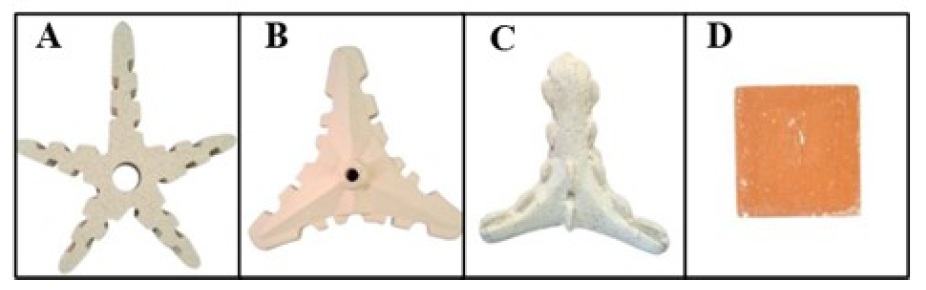
Los arrecifes coralinos han presentado disminuciones en su cobertura, por lo tanto, las estrategias de restauración a través de reproducción sexual son relevantes debido a que generan variabilidad genética y favorecen el reclutamiento coralino. Se recolectaron gametos en los eventos reproductivos de septiembre y octubre en la especie Colpophyllia natans, en mayo para Diploria labyrinthiformis, y en octubre para Pseudodiploria strigosa. En laboratorio se realizó la fertilización asistida y se documentó el desarrollo embrionario y larval. Posteriormente, se siguió el asentamiento de las larvas expuestas a diferentes tipos sustratos previamente acondicionados con algas coralinas costrosas. Finalmente, la sobrevivencia post-asentamiento fue estimada mediante conteos individuales de pólipos por tipo de sustrato en dos fases: laboratorio y tanques externos. Se documentaron nueve estadios de desarrollo para D. labyrinthiformis y P. strigosa y 12 para C. natans. D. labyrinthiformis presentó el mayor número de larvas asentadas (21172), seguido C. natans (5398 en septiembre y 932 en octubre) y P. strigosa (226), con un asentamiento variable entre sustratos. La mayor mortalidad se observó en laboratorio, mientras que al ser trasladaos a tanques externos se redujo para las tres especies, indicio que la mejora en las condiciones de los sistemas experimentales aumenta las tasas de sobrevivencia en condiciones ex situ.
Referencias
Acosta-Chaparro, F., Coneo-Gómez, S. C., Sierra-Sabalza, N., Navas-Camacho, R., Sánchez-Valencia, L., Gómez-López, D. I., y Alonso, D. 2025. Boletín de la operación estadística índice condición tendencia de las áreas coralinas del sector Tayrona: reporte del año 2025. INVEMAR.
Afiq-Rosli, L., y C. M. Duarte. 2025. Adaptive Potential of Intracolonial Genetic Variability in Coral Populations. Ecol. Evol., 15, no. 11: e72352. https://doi.org/10.1002/ece3.72352
Alvarado-Chacón, E. M., Gómez-Lemos, L. A., Sierra-Sabalza, N. P., Hernández-Chamorro, A. M., Lozano-Peña, J. P., Valcárcel-Castellanos, C. A., Pizarro, V., García-Urueña, R., Zárate-Arévalo, J. C., y Rojas, J. A. 2020. Early life history of the caribbean coral Orbicella faveolata (Scleractinia: Merulinidae). Rev. Biol. Trop., 68(4), 1262-1274. http://dx.doi.org/10.15517/rbt.v68i4.40805
Alvarado-Chacón, Elvira-M., García-Urueña, Rocío, Sierra-Escrigas, Silvia-L., Garzón-Machado, Marco-A., Zárate-Arévalo, Juan-C., Sierra-Sabalza, Nireth, Cely, Cesar, y Rincón-Díaz, Natalia. 2023. Embryogenesis, larval development, y post-settlement survival of the coral Orbicella annularis (Scleractinia: Merulinidae). Rev. Biol. Trop., 71(Suppl. 1), e54793. http://dx.doi.org/10.15517/rev.biol.trop..v71is1.54793
Baums, I. B. 2008. A restoration genetics guide for coral reef conservation. Mol. Ecol., 17(12), 2796-2811.
Baums, I.B., Devlin-Durante, M.K., Polato, N.R. 2013. Genotypic variation influences reproductive success y thermal stress tolerance in the reef building coral, Acropora palmata. Coral Reefs 32, 703–717. https://doi.org/10.1111/j.1365-294X.2008.03787
Baums, I.B., Chamberland, V.F., Locatelli, N.S., Conn, T. 2022. Maximizing Genetic Diversity in Coral Restoration Projects. In: van Oppen, M.J.H., Arya Lastra, M. (eds) Coral Reef Conservation y Restoration in the Omics Age. Coral Reefs of the World, vol 15. Springer, Cham. https://doi.org/10.1007/978-3-031-07055-6_3
Birrell, C. L., McCook, L. J., y Willis, B. L. 2005. Effects of algal turfs y sediment on coral settlement. Mar. Pollut. Bull., 51(1-4), 408-414. https://doi.org/10.1016/j.marpolbul.2004.10.022
CARMABI Foundation. 2025. Coral spawning predictions for the southern Caribbean 2025.
Chamberland, V. F., Snowden, S., Marhaver, K. L., Peterson, U., y Vermeij, M. J. A. 2016. The reproductive biology y early life ecology of a common Caribbean brain coral, Diploria labyrinthiformis (Scleractinia: Faviinae). Coral Reefs, 36, 83-94. https://doi.org/10.1007/s00338-016-1504-2
Chamberland, V. F., Petersen, D., Latijnhouwers, K. R. W., Snowden, S., Mueller, B., Vermeij, M. J. A., y Nugues, M. M. 2017. New seeding approach reduces costs and time to outplant sexually propagated corals for reef restoration. Sci. Rep., 7, 18076. https://doi.org/10.1038/s41598-017-17555-z
Chamberland, V. F. 2023. Applying coral breeding to reef restoration: best practices, knowledge gaps, y priority actions in a rapidly‐evolving field. Restor. Ecol., 31(7), e13913. https://doi.org/10.1111/rec.13913
Chamberland, V. F., Bennett, M. J., Speck, T. D., Latijnhouwers, K. R., y Miller, M. W. 2025. Optimizing in vitro fertilization in four Caribbean coral species. PeerJ, 13, e18918. https://doi.org/10.7717/peerj.18918
Coneo-Gómez, S., Acosta-Chaparro, A., Sánchez-Valencia, L., Navas-Camacho, R., Gómez-López, D. I., y Alonso, D. 2024. Boletín de la operación estadística Índice Condición Tendencia de las áreas coralinas del sector Tayrona: reporte del año 2024. INVEMAR.
Cooper, E. L., Hirabayashi, K., Strychar, K. B., y Sammarco, P. W. 2014. Corals y their potential applications to integrative medicine. Evid.-Based Complement. Altern., Med.,2014(1), 184959. https://doi.org/10.1155/2014/184959
Davies, T.W., Levy, O., Tidau, S. 2023. Global disruption of coral broadcast spawning associated with artificial light at night. Nat. Commun. 14, 2511. https://doi.org/10.1038/s41467-023-38070-y
Deshpande, K., Gysbers, D., Yus, J., van Bendegom, D., Nixon, E., McClintock, R., ... y Juarez, G. 2025. Direct observation and quantitative characterization of chemotactic behaviors in Caribbean coral larvae exposed to organic and inorganic settlement cues. Sci. Rep., 15(1), 10173. https://doi.org/10.1038/s41598-025-93194-z
Doropoulos, C., Ward, S., Diaz‐Pulido, G., Hoegh‐Guldberg, O., y Mumby, P. J. 2012. Ocean acidification reduces coral recruitment by disrupting intimate larval‐algal settlement interactions. Ecol. Lett., 15(4), 338-346. https://doi.org/10.1111/j.1461-0248.2012.01743.x
Edmunds, P. J. 2007. Evidence for a decadal-scale decline in the growth rates of juvenile scleractinian corals. Mar. Ecol. Prog. Ser., 341, 1-13. https://doi.org/10.3354/meps341001
Forsman, Z. H., Rinkevich, B., y Hunter, C. L. 2006. Investigating fragment size for culturing reef-building corals (Porites lobata y P. compressa) in ex situ nurseries. Aquaculture, 261(1), 89-97. https://doi.org/10.1016/j.aquaculture.2006.06.040
Giorgi, A., Monti, M., Paul, V. J., Sneed, J. M., y Olson, J. B. 2024. Larvae from three Caribbean corals settle differently in response to crustose coralline algae and their bacterial communities. Mar. Ecol. Prog. Ser., 751, 53-69. https://doi.org/10.3354/meps14739
Gómez-Lemos, L. A., Doropoulos, C., Bayraktarov, E., y Diaz-Pulido, G. 2018. Coralline algal metabolites induce settlement y mediate the inductive effect of epiphytic microbes on coral larvae. Sci. Rep., 8(1), 17557. https://doi.org/10.1038/s41598-018-35206-9
Guerra, C. A. D., Cubillos, C. G., Marchena, H. B., y Zea, S. 2026. Comunidades coralinas asociadas al infralitoral rocoso en Santa Marta y el Parque Nacional Natural Tayrona, Caribe colombiano. INVERMAR., 55(1).
Guest, J. R., Baria, M. V., Gomez, E. D., Heyward, A. J., y Edwards, A. J. 2014. Closing the circle: is it feasible to rehabilitate reefs with sexually propagated corals?. Coral Reefs, 33(1), 45-55. https://doi.org/10.1007/s00338-013-1114-1
Hadfield, M. G., y Paul, V. J. 2001. Natural chemical cues for settlement y metamorphosis of marine invertebrate larvae. Mar. Chem. Ecol., 13(431.461).
Hagedorn, M., Carter, V. L., Hollingsworth, L., Leong, J. C., Kanno, R., Borneman, E. H., ... y Schick, M. 2009. Ex Situ Culture of Caribbean y Pacific Coral Larvae Comparing Various Flow-Through Chambers. Smithson. Contrib. Mar. Sci., (38).
Harrington, L., Fabricius, K., De'Ath, G., y Negri, A. 2004. Recognition y selection of settlement substrata determine post‐settlement survival in corals. Ecology, 85(12), 3428-3437. https://doi.org/10.1890/04-0298
Harrison, P. L., y Wallace, C. C. 1990. Reproduction, dispersal y recruitment of scleractinian corals. Coral reefs (Vol. 25, pp. 133-207).
Harrison, P. L. 2010. Sexual reproduction of scleractinian corals. In Coral reefs: an ecosystem in transition (pp. 59-85). Dordrecht: Springer Netherlys. https://doi.org/10.1007/978-94-007-0114-4_6
Heyward, A., Giuliano, C., Page, C. A., y Randall, C. J. 2024. Rock and roll: experiments on substrate movement and coral settlement. Coral reefs, 43(5), 1417-1429. https://doi.org/10.1007/s00338-024-02547-z
Howells, E. J., Abrego, D., Liew, Y. J., Burt, J. A., Meyer, E., y Arya, M. 2021. Enhancing the heat tolerance of reef-building corals to future warming. Sci. Adv., 7(34), eabg6070. https://doi.org/10.1126/sciadv.abg6070
Kaniewska, P., Alon, S., Karako-Lampert, S., Hoegh-Guldberg, O., y Levy, O. 2015. Signaling cascades y the importance of moonlight in coral broadcast mass spawning. eLife, 4, e09991. https://doi.org/10.7554/eLife.09991
Lin, C. H., Takahashi, S., Mulla, A. J., y Nozawa, Y. 2021. Moonrise timing is key for synchronized spawning in coral Dipsastraea speciosa. Proc. Natl. Acad. Sci., 118(34), e2101985118. https://doi.org/10.1073/pnas.2101985118
Marhaver, K., Chamberland, V., y Vermeij, MJA. 2025. Coral spawning predictions for the Southern Caribbean 2007–2025, CARMABI, Curaçao.
Martínez, S., y Abelson, A. 2013. Coral recruitment: the critical role of early post-settlement survival. ICES J. Mar. Sci., 70(7), 1294-1298.
Matz, M. V., Treml, E. A., Aglyamova, G. V., y Bay, L. K. 2018. Potential y limits for rapid genetic adaptation to warming in a Great Barrier Reef coral. PLoS Genet., 14(4), e1007220. https://doi.org/10.1371/journal.pgen.1007220
Miller, M. W., Kerr, K., y Williams, D. E. 2016. Reef-scale trends in Florida Acropora spp. abundance y the effects of population enhancement. PeerJ, 4, e2523. https://doi.org/10.7717/peerj.2523.
Negri, A. P., Marshall, P. A., y Heyward, A. J. 2007. Differing effects of thermal stress on coral fertilization and early embryogenesis in four Indo Pacific species. Coral Reefs, 26(4), 759-763. https://doi.org/10.1007/s00338-007-0258-2
Nozawa, Y. 2008. Micro-crevice structure enhances coral spat survivorship. J. Exp. Mar. Biol. Ecol., 367(2), 127-130. https://doi.org/10.1016/j.jembe.2008.09.004
Okubo, N., Motokawa, T., y Omori, M. 2005. Embryogenesis, larval development y planula behavior in scleractinian corals. Zool. Sci., 22, 797–806.
Okubo, N., y Motokawa, T. 2007. Embryogenesis in the reef-building coral Acropora spp. Zool. Sci., 24(12), 1169-1177. https://doi.org/10.2108/zsj.24.1169
Okubo, N., Mezaki, T., Nozawa, Y., Nakano, Y., Lien, Y. T., Fukami, H., Hayward, D. C., y Ball, E. E. 2013. Comparative embryology of eleven species of stony corals (Scleractinia). PLOS ONE, 8(12). https://doi.org/10.1371/journal.pone.0084115
Omori, M., Shibata, S., Yokokawa, M., Aota, T., Watanuki, A., y Iwao, K. 2007. Survival y vertical distribution of coral embryos y planula larvae in floating rearing ponds. Galaxea, J. Coral Reef Stud., 8, 77–81. https://doi.org/10.3755/jcrs.8.77
Quigley, K. M., Bay, L. K., y van Oppen, M. J. 2019. The active spread of adaptive variation for reef resilience. Ecol. Evol., 9(19), 11122-11135. https://doi.org/10.1002/ece3.5616
Rada-Osorio, D., Gómez-Lemos, L. A., y García-Urueña, R. 2022. Early development of the threatened coral Acropora cervicornis. Hydrobiologia, 849, 2477-2486. https://doi.org/10.1007/s10750-022-04838-4
Richmond, R. H. 1987. Energetics, competency, y long-distance dispersal of planula larvae of the coral Pocillopora damicornis. Mar. Biol., 93(4), 527-533. https://doi.org/10.1007/BF00392790
Ritson-Williams, R., Arnold, S., Fogarty, N., Steneck, R., Vermeij, M. 2009. New Perspectives on Ecological Mechanisms Affecting Coral Recruitment on Reefs. Smithson. Contrib. Mar. Sci., 437 -457. https://doi.org/10.5479/si.01960768.38.437
Ritson-Williams, R., Arnold, S. N., Paul, V. J., y Steneck, R. S. 2014. Larval settlement preferences of Acropora palmata y Montastraea faveolata in response to diverse red algae. Coral Reefs, 33(1), 59-66. https://doi.org/10.1007/s00338-013-1113-2
Ritson-Williams, R., Arnold, S. N., y Paul, V. J. 2016. Patterns of larval settlement preferences y post settlement survival for seven Caribbean corals. Mar. Ecol. Prog. Ser., 548, 127-138. https://doi.org/10.3354/meps11688
Sellares-Blasco, R. I., Villalpando, M. F., Guendulain-García, S y Aldo Croquer. 2021. Assisted Coral Reproduction in the Dominican Republic: A Successful Story to Replicate in the Caribbean. Front. Mar. Sci. 8:669505. https://doi.org/10.3389/fmars.2021.669505
Schutter, M., ter Hofstede, R., Bloemberg, J., Elzinga, J., van Koningsveld, M., y Osinga, R. 2023. Enhancing survival of ex-situ reared sexual recruits of Acropora palmata for reef rehabilitation. Ecol. Eng., 191, 106962. https://doi.org/10.1016/j.ecoleng.2023.106962
Tebben, J., Motti, C. A., Siboni, N., Tapiolas, D. M., Negri, A. P., Schupp, P. J., ... y Harder, T. 2015. Chemical mediation of coral larval settlement by crustose coralline algae. Sci. Rep., 5(1), 10803. https://doi.org/10.1038/srep10803
Vermeij, M. J. A., N. D. Fogarty, y M. W. Miller. 2006. Pelagic Conditions Affect Larval Behavior, Survival, y Settlement Patterns in the Caribbean Coral Montastraea faveolata. Mar. Ecol. Prog. Ser., 310:119– 128. https://doi.org/10.3354/meps310119
Descargas
Publicado
Número
Sección
Licencia
Derechos de autor 2026 Rada-Osorio, D, García-Urueña, R, Valiente, K

Esta obra está bajo una licencia internacional Creative Commons Atribución-NoComercial-CompartirIgual 4.0.