Fertilization processes, larval phase and ex situ post-settlement survivalprocesses of three reef-building species from the Colombian Caribbean
DOI:
https://doi.org/10.25268/ctezrv35Keywords:
early development, seeding units, coral recruitment, crustose coralline algaeAbstract
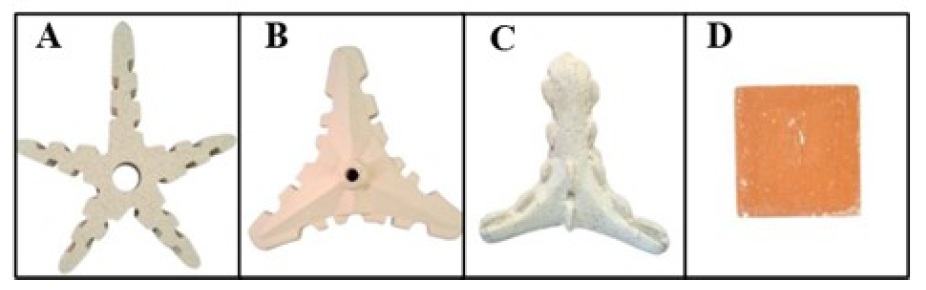
Coral reefs have experienced declines in their cover; therefore, restoration strategies through sexual reproduction are relevant because they generate genetic variability y promote coral recruitment. Gametes were collected during the September y October 2025 reproductive events for the species Colpophyllia natans, in May for Diploria labyrinthiformis, y in October for Pseudodiploria strigosa. Assisted fertilization was performed in the laboratory, y embryonic y larval development was documented. Subsequently, the settlement of larvae exposed to different types of substrates previously conditioned with crustose coralline algae was monitored. Finally, post-settlement survival was estimated by individual polyp counts per substrate type in two phases: laboratory y external tanks. Nine developmental stages were documented for D. labyrinthiformis y P. strigosa, y 12 for C. natans. D. labyrinthiformis showed the highest number of settled larvae (21,172), followed by C. natans (5,398 in September y 932 in October) y P. strigosa (226), with variable settlement rates among substrates. The highest mortality was observed in the laboratory, while mortality decreased for all three species when transferred to external tanks, indicating that improved experimental system conditions increased survival rates in ex situ conditions.
References
Acosta-Chaparro, F., Coneo-Gómez, S. C., Sierra-Sabalza, N., Navas-Camacho, R., Sánchez-Valencia, L., Gómez-López, D. I., y Alonso, D. 2025. Boletín de la operación estadística índice condición tendencia de las áreas coralinas del sector Tayrona: reporte del año 2025. INVEMAR.
Afiq-Rosli, L., y C. M. Duarte. 2025. Adaptive Potential of Intracolonial Genetic Variability in Coral Populations. Ecol. Evol., 15, no. 11: e72352. https://doi.org/10.1002/ece3.72352
Alvarado-Chacón, E. M., Gómez-Lemos, L. A., Sierra-Sabalza, N. P., Hernández-Chamorro, A. M., Lozano-Peña, J. P., Valcárcel-Castellanos, C. A., Pizarro, V., García-Urueña, R., Zárate-Arévalo, J. C., y Rojas, J. A. 2020. Early life history of the caribbean coral Orbicella faveolata (Scleractinia: Merulinidae). Rev. Biol. Trop., 68(4), 1262-1274. http://dx.doi.org/10.15517/rbt.v68i4.40805
Alvarado-Chacón, Elvira-M., García-Urueña, Rocío, Sierra-Escrigas, Silvia-L., Garzón-Machado, Marco-A., Zárate-Arévalo, Juan-C., Sierra-Sabalza, Nireth, Cely, Cesar, y Rincón-Díaz, Natalia. 2023. Embryogenesis, larval development, y post-settlement survival of the coral Orbicella annularis (Scleractinia: Merulinidae). Rev. Biol. Trop., 71(Suppl. 1), e54793. http://dx.doi.org/10.15517/rev.biol.trop..v71is1.54793
Baums, I. B. 2008. A restoration genetics guide for coral reef conservation. Mol. Ecol., 17(12), 2796-2811.
Baums, I.B., Devlin-Durante, M.K., Polato, N.R. 2013. Genotypic variation influences reproductive success y thermal stress tolerance in the reef building coral, Acropora palmata. Coral Reefs 32, 703–717. https://doi.org/10.1111/j.1365-294X.2008.03787
Baums, I.B., Chamberland, V.F., Locatelli, N.S., Conn, T. 2022. Maximizing Genetic Diversity in Coral Restoration Projects. In: van Oppen, M.J.H., Arya Lastra, M. (eds) Coral Reef Conservation y Restoration in the Omics Age. Coral Reefs of the World, vol 15. Springer, Cham. https://doi.org/10.1007/978-3-031-07055-6_3
Birrell, C. L., McCook, L. J., y Willis, B. L. 2005. Effects of algal turfs y sediment on coral settlement. Mar. Pollut. Bull., 51(1-4), 408-414. https://doi.org/10.1016/j.marpolbul.2004.10.022
CARMABI Foundation. 2025. Coral spawning predictions for the southern Caribbean 2025.
Chamberland, V. F., Snowden, S., Marhaver, K. L., Peterson, U., y Vermeij, M. J. A. 2016. The reproductive biology y early life ecology of a common Caribbean brain coral, Diploria labyrinthiformis (Scleractinia: Faviinae). Coral Reefs, 36, 83-94. https://doi.org/10.1007/s00338-016-1504-2
Chamberland, V. F., Petersen, D., Latijnhouwers, K. R. W., Snowden, S., Mueller, B., Vermeij, M. J. A., y Nugues, M. M. 2017. New seeding approach reduces costs and time to outplant sexually propagated corals for reef restoration. Sci. Rep., 7, 18076. https://doi.org/10.1038/s41598-017-17555-z
Chamberland, V. F. 2023. Applying coral breeding to reef restoration: best practices, knowledge gaps, y priority actions in a rapidly‐evolving field. Restor. Ecol., 31(7), e13913. https://doi.org/10.1111/rec.13913
Chamberland, V. F., Bennett, M. J., Speck, T. D., Latijnhouwers, K. R., y Miller, M. W. 2025. Optimizing in vitro fertilization in four Caribbean coral species. PeerJ, 13, e18918. https://doi.org/10.7717/peerj.18918
Coneo-Gómez, S., Acosta-Chaparro, A., Sánchez-Valencia, L., Navas-Camacho, R., Gómez-López, D. I., y Alonso, D. 2024. Boletín de la operación estadística Índice Condición Tendencia de las áreas coralinas del sector Tayrona: reporte del año 2024. INVEMAR.
Cooper, E. L., Hirabayashi, K., Strychar, K. B., y Sammarco, P. W. 2014. Corals y their potential applications to integrative medicine. Evid.-Based Complement. Altern., Med.,2014(1), 184959. https://doi.org/10.1155/2014/184959
Davies, T.W., Levy, O., Tidau, S. 2023. Global disruption of coral broadcast spawning associated with artificial light at night. Nat. Commun. 14, 2511. https://doi.org/10.1038/s41467-023-38070-y
Deshpande, K., Gysbers, D., Yus, J., van Bendegom, D., Nixon, E., McClintock, R., ... y Juarez, G. 2025. Direct observation and quantitative characterization of chemotactic behaviors in Caribbean coral larvae exposed to organic and inorganic settlement cues. Sci. Rep., 15(1), 10173. https://doi.org/10.1038/s41598-025-93194-z
Doropoulos, C., Ward, S., Diaz‐Pulido, G., Hoegh‐Guldberg, O., y Mumby, P. J. 2012. Ocean acidification reduces coral recruitment by disrupting intimate larval‐algal settlement interactions. Ecol. Lett., 15(4), 338-346. https://doi.org/10.1111/j.1461-0248.2012.01743.x
Edmunds, P. J. 2007. Evidence for a decadal-scale decline in the growth rates of juvenile scleractinian corals. Mar. Ecol. Prog. Ser., 341, 1-13. https://doi.org/10.3354/meps341001
Forsman, Z. H., Rinkevich, B., y Hunter, C. L. 2006. Investigating fragment size for culturing reef-building corals (Porites lobata y P. compressa) in ex situ nurseries. Aquaculture, 261(1), 89-97. https://doi.org/10.1016/j.aquaculture.2006.06.040
Giorgi, A., Monti, M., Paul, V. J., Sneed, J. M., y Olson, J. B. 2024. Larvae from three Caribbean corals settle differently in response to crustose coralline algae and their bacterial communities. Mar. Ecol. Prog. Ser., 751, 53-69. https://doi.org/10.3354/meps14739
Gómez-Lemos, L. A., Doropoulos, C., Bayraktarov, E., y Diaz-Pulido, G. 2018. Coralline algal metabolites induce settlement y mediate the inductive effect of epiphytic microbes on coral larvae. Sci. Rep., 8(1), 17557. https://doi.org/10.1038/s41598-018-35206-9
Guerra, C. A. D., Cubillos, C. G., Marchena, H. B., y Zea, S. 2026. Comunidades coralinas asociadas al infralitoral rocoso en Santa Marta y el Parque Nacional Natural Tayrona, Caribe colombiano. INVERMAR., 55(1).
Guest, J. R., Baria, M. V., Gomez, E. D., Heyward, A. J., y Edwards, A. J. 2014. Closing the circle: is it feasible to rehabilitate reefs with sexually propagated corals?. Coral Reefs, 33(1), 45-55. https://doi.org/10.1007/s00338-013-1114-1
Hadfield, M. G., y Paul, V. J. 2001. Natural chemical cues for settlement y metamorphosis of marine invertebrate larvae. Mar. Chem. Ecol., 13(431.461).
Hagedorn, M., Carter, V. L., Hollingsworth, L., Leong, J. C., Kanno, R., Borneman, E. H., ... y Schick, M. 2009. Ex Situ Culture of Caribbean y Pacific Coral Larvae Comparing Various Flow-Through Chambers. Smithson. Contrib. Mar. Sci., (38).
Harrington, L., Fabricius, K., De'Ath, G., y Negri, A. 2004. Recognition y selection of settlement substrata determine post‐settlement survival in corals. Ecology, 85(12), 3428-3437. https://doi.org/10.1890/04-0298
Harrison, P. L., y Wallace, C. C. 1990. Reproduction, dispersal y recruitment of scleractinian corals. Coral reefs (Vol. 25, pp. 133-207).
Harrison, P. L. 2010. Sexual reproduction of scleractinian corals. In Coral reefs: an ecosystem in transition (pp. 59-85). Dordrecht: Springer Netherlys. https://doi.org/10.1007/978-94-007-0114-4_6
Heyward, A., Giuliano, C., Page, C. A., y Randall, C. J. 2024. Rock and roll: experiments on substrate movement and coral settlement. Coral reefs, 43(5), 1417-1429. https://doi.org/10.1007/s00338-024-02547-z
Howells, E. J., Abrego, D., Liew, Y. J., Burt, J. A., Meyer, E., y Arya, M. 2021. Enhancing the heat tolerance of reef-building corals to future warming. Sci. Adv., 7(34), eabg6070. https://doi.org/10.1126/sciadv.abg6070
Kaniewska, P., Alon, S., Karako-Lampert, S., Hoegh-Guldberg, O., y Levy, O. 2015. Signaling cascades y the importance of moonlight in coral broadcast mass spawning. eLife, 4, e09991. https://doi.org/10.7554/eLife.09991
Lin, C. H., Takahashi, S., Mulla, A. J., y Nozawa, Y. 2021. Moonrise timing is key for synchronized spawning in coral Dipsastraea speciosa. Proc. Natl. Acad. Sci., 118(34), e2101985118. https://doi.org/10.1073/pnas.2101985118
Marhaver, K., Chamberland, V., y Vermeij, MJA. 2025. Coral spawning predictions for the Southern Caribbean 2007–2025, CARMABI, Curaçao.
Martínez, S., y Abelson, A. 2013. Coral recruitment: the critical role of early post-settlement survival. ICES J. Mar. Sci., 70(7), 1294-1298.
Matz, M. V., Treml, E. A., Aglyamova, G. V., y Bay, L. K. 2018. Potential y limits for rapid genetic adaptation to warming in a Great Barrier Reef coral. PLoS Genet., 14(4), e1007220. https://doi.org/10.1371/journal.pgen.1007220
Miller, M. W., Kerr, K., y Williams, D. E. 2016. Reef-scale trends in Florida Acropora spp. abundance y the effects of population enhancement. PeerJ, 4, e2523. https://doi.org/10.7717/peerj.2523.
Negri, A. P., Marshall, P. A., y Heyward, A. J. 2007. Differing effects of thermal stress on coral fertilization and early embryogenesis in four Indo Pacific species. Coral Reefs, 26(4), 759-763. https://doi.org/10.1007/s00338-007-0258-2
Nozawa, Y. 2008. Micro-crevice structure enhances coral spat survivorship. J. Exp. Mar. Biol. Ecol., 367(2), 127-130. https://doi.org/10.1016/j.jembe.2008.09.004
Okubo, N., Motokawa, T., y Omori, M. 2005. Embryogenesis, larval development y planula behavior in scleractinian corals. Zool. Sci., 22, 797–806.
Okubo, N., y Motokawa, T. 2007. Embryogenesis in the reef-building coral Acropora spp. Zool. Sci., 24(12), 1169-1177. https://doi.org/10.2108/zsj.24.1169
Okubo, N., Mezaki, T., Nozawa, Y., Nakano, Y., Lien, Y. T., Fukami, H., Hayward, D. C., y Ball, E. E. 2013. Comparative embryology of eleven species of stony corals (Scleractinia). PLOS ONE, 8(12). https://doi.org/10.1371/journal.pone.0084115
Omori, M., Shibata, S., Yokokawa, M., Aota, T., Watanuki, A., y Iwao, K. 2007. Survival y vertical distribution of coral embryos y planula larvae in floating rearing ponds. Galaxea, J. Coral Reef Stud., 8, 77–81. https://doi.org/10.3755/jcrs.8.77
Quigley, K. M., Bay, L. K., y van Oppen, M. J. 2019. The active spread of adaptive variation for reef resilience. Ecol. Evol., 9(19), 11122-11135. https://doi.org/10.1002/ece3.5616
Rada-Osorio, D., Gómez-Lemos, L. A., y García-Urueña, R. 2022. Early development of the threatened coral Acropora cervicornis. Hydrobiologia, 849, 2477-2486. https://doi.org/10.1007/s10750-022-04838-4
Richmond, R. H. 1987. Energetics, competency, y long-distance dispersal of planula larvae of the coral Pocillopora damicornis. Mar. Biol., 93(4), 527-533. https://doi.org/10.1007/BF00392790
Ritson-Williams, R., Arnold, S., Fogarty, N., Steneck, R., Vermeij, M. 2009. New Perspectives on Ecological Mechanisms Affecting Coral Recruitment on Reefs. Smithson. Contrib. Mar. Sci., 437 -457. https://doi.org/10.5479/si.01960768.38.437
Ritson-Williams, R., Arnold, S. N., Paul, V. J., y Steneck, R. S. 2014. Larval settlement preferences of Acropora palmata y Montastraea faveolata in response to diverse red algae. Coral Reefs, 33(1), 59-66. https://doi.org/10.1007/s00338-013-1113-2
Ritson-Williams, R., Arnold, S. N., y Paul, V. J. 2016. Patterns of larval settlement preferences y post settlement survival for seven Caribbean corals. Mar. Ecol. Prog. Ser., 548, 127-138. https://doi.org/10.3354/meps11688
Sellares-Blasco, R. I., Villalpando, M. F., Guendulain-García, S y Aldo Croquer. 2021. Assisted Coral Reproduction in the Dominican Republic: A Successful Story to Replicate in the Caribbean. Front. Mar. Sci. 8:669505. https://doi.org/10.3389/fmars.2021.669505
Schutter, M., ter Hofstede, R., Bloemberg, J., Elzinga, J., van Koningsveld, M., y Osinga, R. 2023. Enhancing survival of ex-situ reared sexual recruits of Acropora palmata for reef rehabilitation. Ecol. Eng., 191, 106962. https://doi.org/10.1016/j.ecoleng.2023.106962
Tebben, J., Motti, C. A., Siboni, N., Tapiolas, D. M., Negri, A. P., Schupp, P. J., ... y Harder, T. 2015. Chemical mediation of coral larval settlement by crustose coralline algae. Sci. Rep., 5(1), 10803. https://doi.org/10.1038/srep10803
Vermeij, M. J. A., N. D. Fogarty, y M. W. Miller. 2006. Pelagic Conditions Affect Larval Behavior, Survival, y Settlement Patterns in the Caribbean Coral Montastraea faveolata. Mar. Ecol. Prog. Ser., 310:119– 128. https://doi.org/10.3354/meps310119
Downloads
Published
Issue
Section
License
Copyright (c) 2026 Rada-Osorio, D, García-Urueña, R, Valiente, K

This work is licensed under a Creative Commons Attribution-NonCommercial-ShareAlike 4.0 International License.