Global connectivity and genetic characterization of the hawksbill turtle (Eretmochelysimbricata) in the Islas del Rosario and San Bernardo Natural National Park, Colombia
DOI:
https://doi.org/10.25268/bimc.invemar.2026.55.2.1384Keywords:
foraging areas, genetic diversity, phylogeography, mix stock analysisAbstract
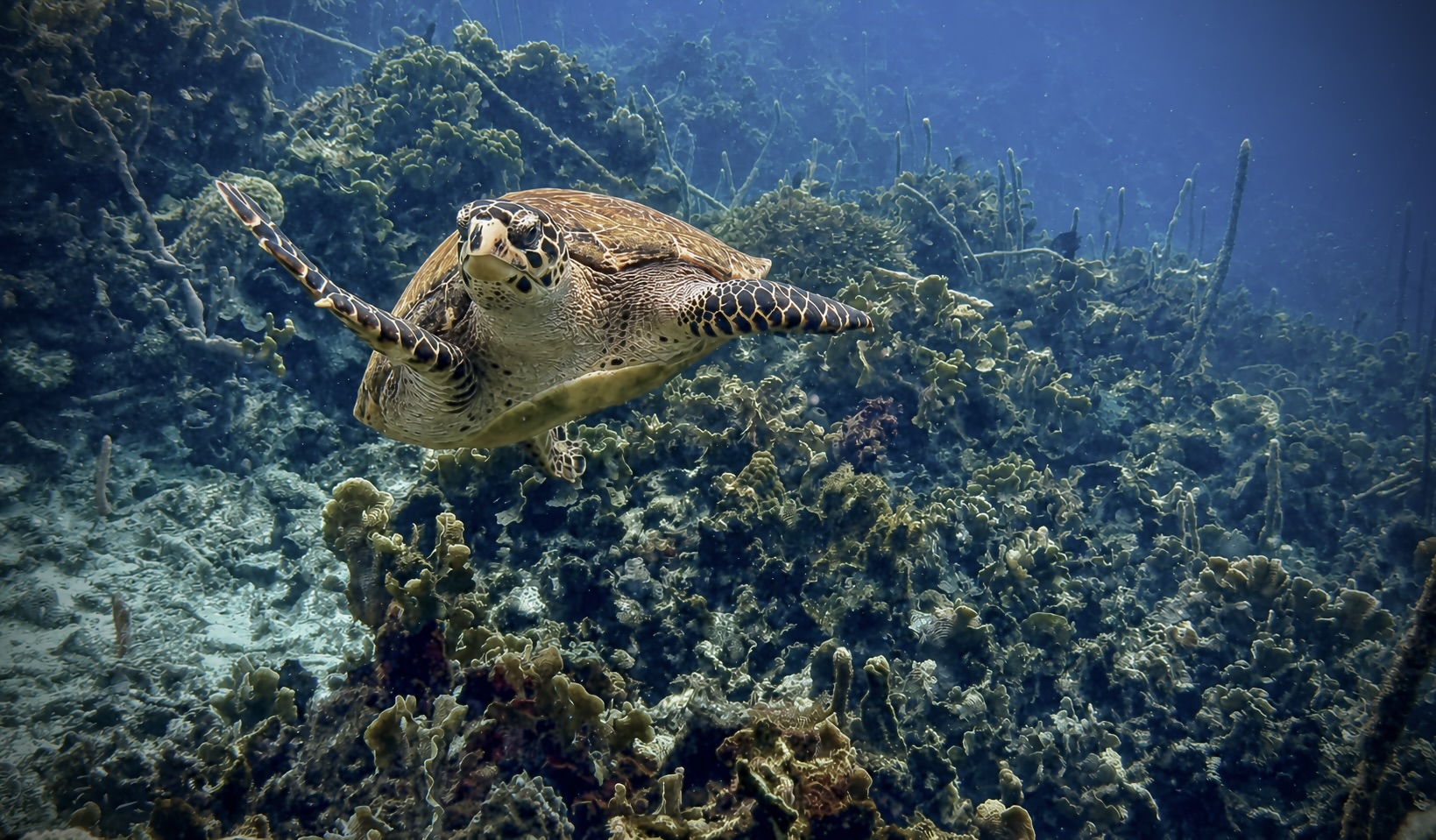
Understanding the population dynamics of the hawksbill turtle (Eretmochelys imbricata), a critically endangered
migratory species, is essential for effective conservation planning. This study examined the genetic structure, diversity, and connectivity of hawksbill turtles from PNN Rosario Islands, Colombia, using mitochondrial DNA sequences from the control region. Nineteen samples were amplified, yielding ten haplotypes integrated into a dataset of 396 sequences representing 1,872 individuals. A median-joining haplotype network revealed four phylogeographic clades spanning the western Atlantic, eastern Atlantic, and two Indo-Pacific lineages. Colombian samples clustered within the western Atlantic clade, sharing haplotypes with Puerto Rico, Brazil, and the Lesser Antilles while containing novel haplotypes. Diversity indices identified Colombia as one of the most diverse localities in the western Atlantic (h = 0.971 ± 0.027; π = 1% ± 0.005), whereas Cuba (h = 0.091 ± 0.049; π = 0.1% ± 0.001) and Guadeloupe (h = 0.131 ± 0.053; π = 0.1% ± 0.001) exhibited lower diversity. Pairwise Fst and Φst values indicated moderate to high differentiation
across the region; because all comparisons were significant, values closer to 0 denote higher matrilineal affinity (e.g., Colombia–Puerto Rico, Fst = 0.102) whereas higher values reflect reduced affinity (e.g., Cuba–Mexico, Fst = 0.835). Mixed Stock Analysis showed that Colombia hosts a foraging aggregation primarily linked to Guadeloupe and Costa Rica. Together, these findings provide a phylogeographic context for hawksbill turtles in Colombia and highlight the need for coordinated, multinational conservation strategies.
References
Abreu-Grobois, F.A., Horrocks, J., Formia, A., LeRoux, R., Vélez-Zuazo, X., Dutton, P., Soares, L., Meylan, P. and Browne, D. (2006). New mtDNA D-loop primers which work for a variety of marine turtle species may increase the resolution capacity of mixed stock analysis. In: Frick, M., Panagopoulou, A., Rees, A.F. and Williams, K. (Eds.), Proceedings of the 26th Annual Symposium on Sea Turtle Biology and Conservation. Crete, Greece, p. 179.
Arantes, L.S., Vargas, S.M. and Santos, F.R. (2020). Global phylogeography of the critically endangered hawksbill turtle (Eretmochelys imbricata). Genetics and Molecular Biology, 43(2), e20190264. doi: 10.1590/1678-4685-GMB-2019-0264
Arcos, M., Barrero, A., Guarín, G. and Quintero, P. (2002). Establishment and comparisons of structural characteristics of sea turtle nesting focal points already established in the Arrecifes National Natural Park sector. Research Seminar. Santa Marta: Universidad Jorge Tadeo Lozano, p. 54.
Bolker, B. (2012). mixstock: Mixed Stock Analysis Using Bayesian MCMC. R package.
Ceballos-Fonseca, C. (2004). Distribution of nesting beaches and feeding areas of sea turtles and their threats in the Colombian Caribbean. Boletín de Investigaciones Marinas y Costeras, 33, pp. 79–99. doi: https://doi.org/10.25268/bimc.invemar.2004.33.0.249
Dutton, P.H. (1995). Simple biopsy technique for sampling skin for DNA analysis of sea turtles. Marine Turtle Newsletter, 69, pp. 9–10.
Edgar, R.C. (2004). MUSCLE: multiple sequence alignment with high accuracy and high throughput. Nucleic Acids Research, 32(5), pp. 1792–1797. doi: https://doi.org/10.1093/nar/gkh340
Excoffier, L., Laval, G. and Schneider, S. (2005). Arlequin (version 3.0): an integrated software package for population genetics data analysis. Evolutionary Bioinformatics Online, 1, pp. 47–50.
Gaos, A.R., Lewison, R.L., Liles, M.J., Gadea, V., Altamirano, E., Henríquez, A.V., Torres, P., Urteaga, J., Vallejo, F., Baquero, A., LeMarie, C., Muñoz, J.P., Chaves, J.A., Hart, C.E., Peña de Niz, A., Chácon, D., Fonseca, L., Otterstrom, S., Yañez, I.L., LaCasella, E.L., Frey, A., Jensen, M.P. and Dutton, P.H. (2016). Hawksbill turtle terra incognita: conservation genetics of eastern Pacific rookeries. Ecology and Evolution, 6(4), pp. 1251–1264. doi: https://doi.org/10.1002/ece3.1897
Geneious Prime. (2024). Geneious Prime 2024.0.4. Biomatters Ltd. https://www.geneious.com
Larsson, A. (2014). AliView: a fast and lightweight alignment viewer and editor for large datasets. Bioinformatics, 30(22), pp. 3276–3278. doi: https://doi.org/10.1093/bioinformatics/btu531
Leigh, J.W. and Bryant, D. (2015). POPART: full-feature software for haplotype network construction. Methods in Ecology and Evolution, 6(9), pp. 1110–1116. doi:https://doi.org/10.1111/2041-210X.12410
LeRoux, R.A., Dutton, P.H., Abreu-Grobois, F.A., Lagueux, C.J., Campbell, C.L., Delcroix, E., Chevalier, J., Horrocks, J.A., Hillis-Starr, Z., Troëng, S., Harrison, E. and Stapleton, S. (2012). Re-examination of population structure and phylogeography of hawksbill turtles in the wider Caribbean using longer mtDNA sequences. Journal of Heredity, 103(6), pp. 806–820. doi: https://doi.org/10.1093/jhered/ess055
Maddison, D.R. and Maddison, W.P. (2000). MacClade 4: analysis of phylogeny and character evolution. Sunderland: Sinauer Associates.
McCormick, C.C. (1997). Because they also have the right to continue leaving their mark. Current diagnosis of sea turtles in the archipelago of San Andrés, Providencia and Santa Catalina, Phase II. San Andrés, Colombia: Coralina, p. 67.
McCormick, C.C. (1998). Current diagnosis of sea turtles in the archipelago of San Andrés, Providencia and Santa Catalina. San Andrés: Coralina, p. 41.
Moncada, F.G., Hawkes, L.A., Fish, M.R., Godley, B.J., Manolis, S.C., Medina, Y., Nodarse, G. and Webb, G.J.W. (2012). Patterns of dispersal of hawksbill turtles from the Cuban shelf inform scale of conservation and management. Biological Conservation, 148(2), pp. 191–199. doi: 10.1016/j.biocon.2012.01.011
Monzón-Argüello, C., Rico, C., Marco, A., López, P. and López-Jurado, L.F. (2010). Genetic characterization of eastern Atlantic hawksbill turtles at a foraging group indicates major undiscovered nesting populations in the region. Journal of Experimental Marine Biology and Ecology, 387(1–2), pp. 9–14. doi: https://doi.org/10.1016/j.jembe.2010.03.004
Mortimer, J.A. and Donnelly, M. (2008). Eretmochelys imbricata. The IUCN Red List of Threatened Species 2008: e.T8005A12881238. https://www.iucnredlist.org
Naro-Maciel, E., Le, M., FitzSimmons, N.N. and Amato, G. (2008). Evolutionary relationships of marine turtles: a molecular phylogenetic perspective. Molecular Phylogenetics and Evolution, 49(2), pp. 659–662. doi: https://doi.org/10.1016/j.ympev.2008.08.004
NCBI Resource Coordinators. (2016). Database resources of the National Center for Biotechnology Information. Nucleic Acids Research, 44(D1), pp. D7–D19. doi: https://doi.org/10.1093/nar/gkv1290
NOAA Fisheries. (2025). Hawksbill turtle (Eretmochelys imbricata). U.S. National Oceanic and Atmospheric Administration. [https://www.fisheries.noaa.gov/species/hawksbill-turtle] [Accessed: 05.28.2026].
Norton, T. and Mettee, N. (2020). Sample collection techniques. Technical Report 2.0. Illinois: WIDECAST.
O'Dea, A., Lessios, H.A., Coates, A.G., Eytan, R.I., Restrepo-Moreno, S.A., Cione, A.L., Collins, L.S., de Queiroz, A., Farris, D.W., Norris, R.D., Stallard, R.F., Woodburne, M.O., Aguilera, O., Aubry, M.-P., Berggren, W.A., Budd, A.F., Cozzuol, M.A., Coppard, S.E., Duque-Caro, H., Finnegan, S., Gasparini, G.M., Grossman, E.L., Johnson, K.G., Keigwin, L.D., Knowlton, N., Leigh, E.G., Leonard-Pingel, J.S., Marko, P.B., Pyenson, N.D., Rachello-Dolmen, P.G., Soibelzon, E., Soibelzon, L., Todd, J.A., Vermeij, G.J. and Jackson, J.B.C. (2016). Formation of the Isthmus of Panama. Science Advances, 2(8), e1600883. doi: https://doi.org/10.1126/sciadv.1600883
Pella, J. and Masuda, M. (2001). Bayesian methods for analysis of stock mixtures from genetic characters. Fishery Bulletin, 99(1), pp. 151–167.
Proietti, M.C., Reisser, J.W., Marins, L.F. and Secchi, E.R. (2014). Genetic diversity of green turtles (Chelonia mydas) at a feeding ground in the southwestern Atlantic. Marine Biology, 161(1), pp. 61–73.
Qiagen. (2010). QIAamp DNA Mini and Blood Mini Handbook. https://www.qiagen.com [Accessed: 16/06/2025].
R Core Team. (2022). R: a language and environment for statistical computing. Vienna: R Foundation for Statistical Computing. https://www.R-project.org/
Rincón-Díaz, M.P. and Rodríguez-Zárate, C.J. (2004). Characterization of nesting and feeding areas of sea turtles in San Bernardo Archipelago, Colombian Caribbean. Boletín de Investigaciones Marinas y Costeras, 33, pp. 137–158. doi: https://doi.org/10.25268/bimc.invemar.2004.33.0.252
Sani, L.M.I., Jamaludin, Hadiko, G., Herma, E., Inoguchi, E., Jensen, M.P., Madden, C.A., Nishizawa, H., Maryani, L., Farajallah, A., Subhan, B., Bengen, D.G. and Madduppa, H. (2024). Unraveling fine-scale genetic structure in endangered hawksbill turtle (Eretmochelys imbricata) in Indonesia: implications for management strategies. Frontiers in Marine Science, 11, 1358695. doi: https://doi.org/10.3389/fmars.2024.1358695
Simões, T.N., dos Santos, E.M., Santos, A.S., Gaiotto, F.A., Costa, M.A., de Menezes Assis, E.T.C., da Silva Neves, V.C., de Santana Magalhães, W.M., Mascarenhas, R., Bonfim, W.A.G., Neves, J.N. and Solé, M. (2021). Low diversity and strong genetic structure between feeding and nesting areas in Brazil for the critically endangered hawksbill sea turtle. Frontiers in Ecology and Evolution, 9, 704838. doi: https://doi.org/10.3389/fevo.2021.704838
Stringell, T.B. (2013). Population dynamics of marine turtles under harvest. PhD thesis, University of Exeter. https://hdl.handle.net/10871/14521
Tabib, M., Zolgharnein, H., Mohammadi, M., Salari-Aliabadi, M.A., Qasemi, A., Roshani, S., Rajabi-Maham, H. and Frootan, F. (2011). mtDNA variation of the critically endangered hawksbill turtle (Eretmochelys imbricata) nesting on Iranian islands of the Persian Gulf. Genetics and Molecular Research, 10(3), pp. 1499–1503. doi: 10.4238/vol10-3gmr1148
Tanabe, L.K., Cochran, J.E.M., Williams, C.T., Garzon, F., Langner, U., Hardenstine, R.S., Hawkes, L.A., Brainard, R.E., Eweida, A.A., Marshall, P.A. and Berumen, M.L. (2023). Case report: tracking data from foraging hawksbill turtles in the northern Red Sea. Animal Biotelemetry, 11(1), 1. doi: https://doi.org/10.1186/s40317-022-00314-x
Traffic. (2002). CITES review of the exploitation, trade and management of sea turtles in the Lesser Antilles, Central America, Colombia and Venezuela. Interim report commissioned by Traffic International on behalf of CITES, Santiago, p. 17.
Trujillo-Arias, N., Amorocho, D.F., López-Álvarez, D. and Mejía-Ladino, L.M. (2014). Phylogeographic relations of some feeding and nesting hawksbill turtle rookeries (Eretmochelys imbricata) in the Caribbean and Pacific of Colombia. Boletín de Investigaciones Marinas y Costeras, 43(1), pp. 159–182. doi: https://doi.org/10.25268/bimc.invemar.2014.43.1.30
Vargas, S.M., Jensen, M.P., Ho, S.Y.W., Mobaraki, A., Broderick, D., Mortimer, J.A., Whiting, S.D., Miller, J., Prince, R.I.T., Bell, I.P., Hoenner, X., Limpus, C.J., Santos, F.R. and FitzSimmons, N.N. (2016). Phylogeography, genetic diversity, and management units of hawksbill turtles in the Indo-Pacific. Journal of Heredity, 107(3), pp. 199–213. doi: https://doi.org/10.1093/jhered/esv091
Vélez-Zuazo, X., Ramos, W.D., van Dam, R.P., Diez, C.E., Abreu-Grobois, A. and McMillan, W.O. (2008). Dispersal, recruitment and migratory behaviour in a hawksbill sea turtle aggregation. Molecular Ecology, 17(4), pp. 839–853. doi: https://doi.org/10.1111/j.1365-294X.2007.03635.x
Wood, L.D., Hardy, R., Meylan, P.A. and Meylan, A.B. (2013). Characterization of a hawksbill turtle (Eretmochelys imbricata) foraging aggregation in a high-latitude reef community in southeastern Florida, USA. Herpetological Conservation and Biology, 8(1), pp. 258–275.
Downloads
Published
Issue
Section
License
Copyright (c) 2026 Nadine Hakim de la torre, Daniel Marín, Juan Esteban Jácome Castro, Yabriel Pagán-Benítez, Jaime Alberto-Rojas, Nicole Hakim, Adriana Marcela-Celis, Susana Caballero

This work is licensed under a Creative Commons Attribution-NonCommercial-ShareAlike 4.0 International License.