Spatial distribution patterns and community structure of thecoastal nematodes from Chetumal Bay, Mexico
DOI:
https://doi.org/10.25268/bimc.invemar.2026.55.2.1388Keywords:
Caribbean, estuarine, sediments, coastal zone, Dissolved oxygenAbstract
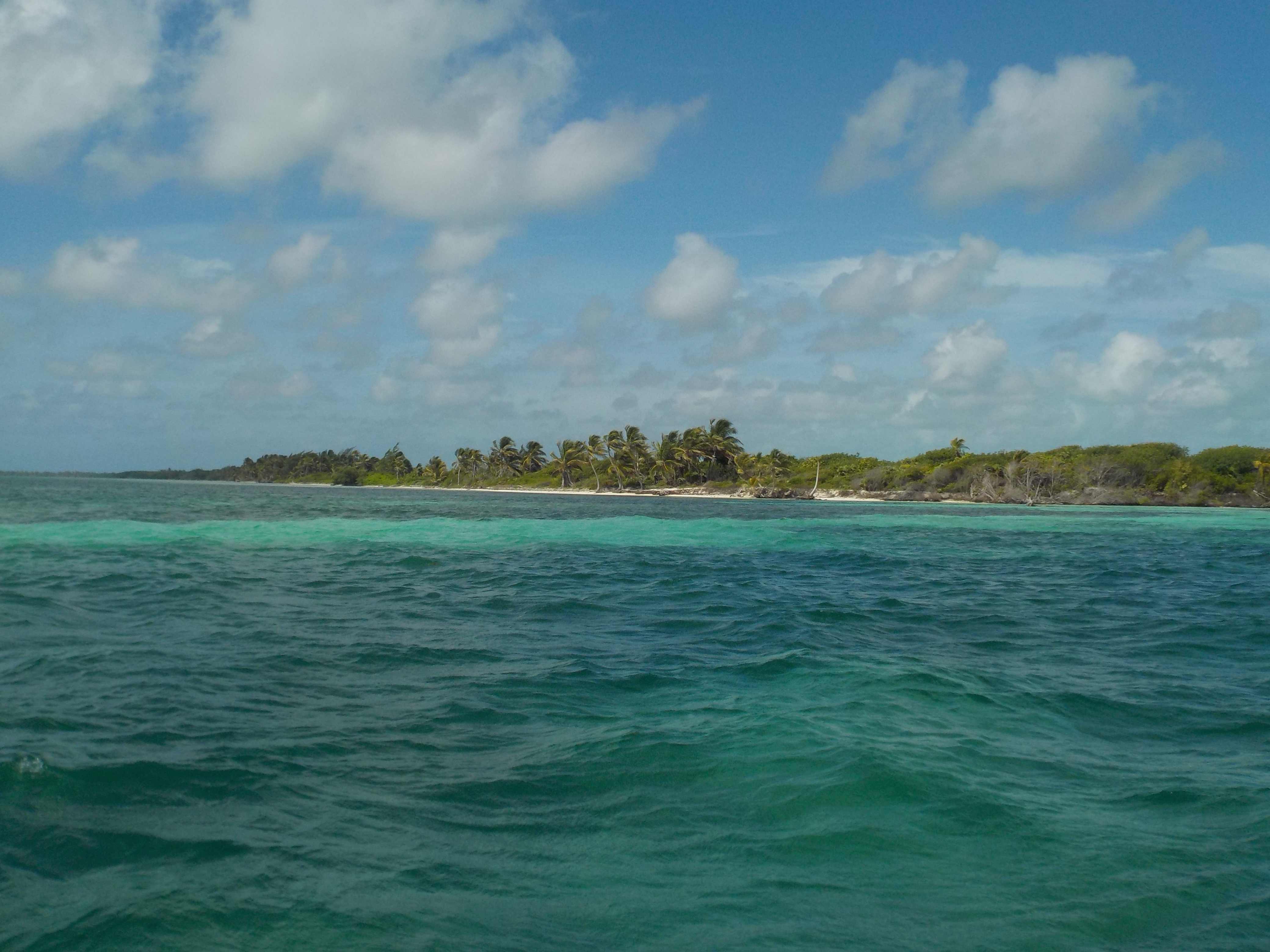
The distribution and composition of nematodes were studied in Chetumal Bay. Six sites of Chetumal Bay were selected in April 2019, where duplicate sediment samples were collected. The nematodes were identified at the lowest level possible and classified into four trophic groups and their life strategy. Subsequently, the index of trophic diversity (ITD) and Maturity Index (MI) were determined. Additionally, temperature, salinity and dissolved oxygen were measured in the water column, while in the sediment grain size and chlorophyll a were determined. The nematode community was represented by seven Orders, 18 Families, 42 genera, and 56 species. The families Desmodoridae and Xyalidae were the most diverse in terms of genera with nine and seven genera, respectively. Anoplostoma sp. was the most abundant species, while Stylotheristus sp. was the most distributed, present in all sites. The species composition changes significantly between sites, and the community was mainly influenced by dissolved oxygen and grain size. The nematode diversity was low in sites close in sites near the city of Chetumal, while the highest values are near the Caribbean Sea. Similarly, according to the ITD and MI, sites near the city showed poor-moderate environmental conditions, while those near the Caribbean Sea showed good-high conditions.
References
Adão, H., Alves, A.S., Patrício, J., Neto, J.M., Costa, M.J. and Marques, J.C. (2009). Spatial distribution of subtidal Nematoda communities along the salinity gradient in southern European estuaries. Acta Oecologica, 35, pp.287–300. doi: https://doi.org/10.1016/j.actao.2008.11.007
Alongi, D.M. (1987). The influence of mangrove-derived tannins on intertidal meiobenthos in tropical estuaries. Oecologia, 71, pp.537–540. doi: https://doi.org/10.1007/BF00379293
Alves, A.S.,. Veríssimo, H., Costa, M.J. and Marques, J.C. (2014). Taxonomic resolution and Biological Traits Analysis (BTA) approaches
in estuarine free-living nematodes. Estuarine, Coastal and Shelf Science, 138, pp. 69–78. https://doi.org/10.1016/j.ecss.2013.12.014
Aubrey, D.G. (1986). Hydrodynamic controls on sediment transport in well-mixed bays and estuaries. Physics of shallow estuaries and bays, 16. doi: https://doi.org/10.1029/LN016p0245
Avalos-Cueva, D., Palacios-Hernández, E., Carrillo, L. and González-Vivanco, L.A. (2017). Numerical models as tools to understand the dynamics in bays: Case of study Chetumal bay, Quintana Roo. Revista Ra Ximhai, 13, pp. 26–290.
Baia, E., Rollnic, M. and Venekey, V. (2021). Seasonality of pluviosity and saline intrusion drive meiofauna and nematodes on an Amazon freshwateroligohaline beach. Journal of Sea Research, 170, p.102022. doi: https://doi.org/10.1016/j.seares.2021.102022
Bongers, T. (1999). The maturity index, the evolution of nematode life historytraits, adaptive radiation and cp-scaling. Plant and Soil, 212, pp. 13–22. https://doi.org/10.1023/A:1004571900425
Bongers, T., Alkemade, R. and Yeates, G.W. (1991). Interpretation of disturbanceinduced maturity decrease in marine nematode assemblages by means of the Maturity Index. Marine Ecology Progress Series, 76, pp. 135–142. doi:
https://doi.org/10.3354/meps076135
Boucher, G. and Lambshead, P.J.D. (1995). Ecological biodiversity of marine nematodes in samples from temperate, tropical, and deep-sea Regions. Conservation Biology, 9(6), pp.1 594–1604. http://doi.org/10.1046/j.1523-1739.1995.09061594.x
Buchanan, J.B. (1971). Measurement of physical and chemical environment. pp.38–50. In: Holme N.A. and A.D. McIntyre. (eds). Methods for the study of marine benthos. IBP Handbook Nº 16 Blackwell, Londres.
Buys, B., Derycke, S. De Meester, N. and Moens, T. (2021). Colonization of macroalgal deposits by estuarine nematodes through air and potential for rafting inside algal structures. PLoS ONE, 16(4), p.e0246723. doi: https://doi.org/10.1371/journal. pone.0246723
Carrillo, L., Palacios-Hernández, E., Ramı́rez, A.M. y Morales-Vela, B. (2009). “Caracterı́sticas hidrometeorológicas y batimétricas,” en el sistema ecológico de la bahı́a de Chetumal/Corozal: costa occidental del mar Caribe. En: Espinoza, J., Islebe, G. and Hernández, H. (Eds.). “Bahía Chetumal/ Corozal: diversidad biológica y análisis ambiental en la frontera México-Belice”, ECOSUR. pp.12–20.
Castillo-Fernández, D. and. Lambshead, P.J.D. (1990). Revision of the genus Elzalia Gerlach, 1957. (Nematoda: Xyalidae) including three new species from an oil producing zone in the Gulf of Mexico, with a discussion of the sibling gulf problem. Bulletin of the British Museum (Natural History), 56(1), pp.63–71.
Chen, C.A., Long, S.M. and Rosli, N.M. (2012). Spatial distribution of tropical estuarine nematode communities in Sarawak, Malaysia (Borneo). Raffles Bulletin of Zoology, 60(1), pp.173–181. doi:http://doi.org/10.51200/
bjomsa.v3i2.1995
Chitwood, B.G. and Timm, R.W. (1954). Free-living nematodes of the Gulf of Mexico. pp.313–322. In: Galtsoft. P.S. (ed.). Gulf of Mexico: Its origin, waters and marine life. Fishery Bulletin. Fish and Wildlife Service, Washington. p.55.
Clarke, K.R. and Ainsworth, M. (1993). A method of linking multivariate community structure to environmental variables. Marine Ecology Progress Series, 92, pp.205–219.
Clarke, K.R. and R.N. Gorley, R.N. (2006). PRIMER V6: User Manual/Tutorial. PRIMER-E, Plymouth.
Danovaro, R. and Gambi, C. (2002). Biodiversity and trophic structure of nematode assemblages in seagrass systems: evidence for a coupling with changes in food availability. Marine Biology, 141, pp.667–677. doi: https://doi.org/10.1007/s00227-002-0857-y
Day, J., W. Kemp, A. Yánez-Arancibia and B. Kemp. (2012). Estuarine ecology.Wiley-Blackwell, New Jersey, p.550.
de Jesús Navarrete, A. (1993a). Distribución, abundancia y diversidad de nematodos (Phylum Nematoda) bénticos en la sonda de Campeche, México, enero de 1987. Revista de Biología Tropical, 41(1), pp.57–63.
de Jesús-Navarrete, A. (1993b). Nematodos (Nematoda) de la laguna de Buena Vista, Quintana Roo, México. Revista de Biología Tropical, 41, pp. 649–652.
de Jesús-Navarrete, A. and Álvarez-Legorreta, T.A. (2022). Biological traits analysis of free-living nematodes as indicators of environmental quality at Lake Bacalar, Mexico. Limnology, 23, pp. 355–364. doi: https://doi.org/10.1007/s10201-021-00693-9
de Jesús-Navarrete, A. y Góngora-Pech, V. (2008). Distribución y abundancia de los nematodos en el gradiente salino río Hondo-Bacalar Chico. En: Espinoza, J., G. Islebe and H. Hernández (eds.). Bahía Chetumal / Corozal: diversidad biológica y análisis ambiental en la frontera México-Belice, ECOSUR.
de Jesús-Navarrete, A. y Herrera-Gómez, J. (1999). Nematodos de la Bahía de Chetumal, Quintana Roo, México. Revista de Biología Tropical, 47(4), pp. 867–875.
de Jesús-Navarrete, A. and Herrera-Gómez, J. (2002). Vertical distribution and feeding type of nematodes from Chetumal Bay, Quintana Roo, Mexico. Estuaries, 25(6), pp. 1131–1137. doi: https://doi.org/10.1007/BF02692210
de Jesús-Navarrete, A. and Vargas-Espósitos, A.A. (2026). Nematode assemblages associated to littoral submerged aquatic vegetation at the Bacalar Lake, Quintana Roo, Mexico. Limnologica, 116, p.126310. doi: https://doi.org/10.1016/j.limno.2026.126310
de Jesús-Navarrete, A., Oliva Rivera, J.J. Valencia-Beltrán, V. y Quintero-López, N. (2000). Distribución de sedimentos en la Bahía de Chetumal, Quintana Roo, México. Hidrobiológica, 10, pp. 61–67.
Elliot, M., Day, J.W., Ramachandran, R. and Wolansky, E. (2019). A synthesis:What is the future for coasts, estuaries, deltas and other transitional habitats in 2050 and beyond? In: Wolansky, E., J.W. Day, M. Elliot and R. Ramachandran (Eds.). Coast and estuaries, the future. Elsevier, p. 677. doi: https://doi.org/10.1016/B978-0-12-814003-1.00001-0
García-Ríos, V. and Gold-Bouchot, G. (2003). Trace metals in sediments from Bahia de Chetumal, Mexico. Bulletin of Environmental Contamination and Toxicology, 70, pp.1228–1234. doi: https://doi.org/10.1007/s00128-003-0113-2
Giere, O. (2009). Meiobenthology: The microscopic motile fauna of aquatic sediments, 2nd ed. Springer, Berlin. doi: http://doi.org/10.1007/978-3-540-68661-3
Gourbault, N. and Decraemer, W. (1986). Nematodes marins de Guadeloupe, Epsilonematidae des genres nouveaux Metaglochinnema n. g. (Glochinematinae) et Keratonema n.g. (Keratonematinae n. subfam.). Bulletin du Muséum National d’Histoire Naturelle. Paris, 4 ser. 8, secc. A. No 1, pp. 171–1183.
Hammer, Ø., Harper, D. and Ryan, P. (2001). Past: Paleontological statistics software package for education and data analysis. Palaeontologia. Electronica, 4, p. 9.
Heip, C., Vincx, M. and Vranken, G. (1985). The ecology of marine nematodes. Oceanography and Marine Biology An Annual Review, 23, pp. 399–489.
Hodda, M. (1984). Population processes in estuarine littoral nematodes. MSc. thesis, A.N.U., Canberra. p. 187.
Hopper, B.E. (1961). Marine nematodes from the coastline of the Gulf of México. Canadian Journal of Zoology, 39, pp.183–199.
Hopper, B.E. and Cefalu, R.C. (1973). Free-living marine nematodes from Biscayne Bay, Florida. VII. Enoplidae: Enoplus species in Biscayne Bay with observations on the culture and bionomics of E. paralittoralis Wieser,1953. Proceedings of the Helminthological Society of Washington, 40(2), pp. 275–280.
Hua, E., Zhu, Y., Huang, D. and Liu, X. (2021). Are free-living nematodes effective environmental quality indicators? Insights from Bohai Bay, China. Ecological Indicators, 27, p.107756. doi: https://doi.org/10.1016/j.ecolind.2021.107756
Hua, E., He, L., Zhang, Z., Cui, C. and Liu, X. (2023). Bioassessment of environmental quality based on taxonomic and functional traits of marine nematodes in the Bohai Sea, China. Marine Pollution Bulletin, 190, p.114884. doi: https://doi.org/10.1016/j. marpolbul.2023.114884
Jensen, P. (1985). The nematode fauna in the sulphide-rich brine seep and adjacent bottoms of the East Flower Garden, NW Gulf of México. I. Chromadoria. Zoologica Scripta, 14(4), pp. 247–263.
Karim, M.A., Zhou, H., Uddin, S.M., Montero-Taboada, R. Jiang, Q. and Zeng, R. (2024). Species diversity and functional trait-based approaches in ecological assessment utilizing free-living marine nematodes in Jiaozhou Bay, China. Marine Pollution Bulletin, 209(Pt A), p.117178. doi: https://doi.org/10.1016/j.marpolbul.2024.117178
Keppner, E.J. (1986). New species of free-living marine nematodes (Nematoda:Enoplida) from Bay County, Florida, USA. Transactions of the American Microscopical Society, 105(4), pp.319–337.
Liu, X.S., Zhang, Z.N. and Huang, Y. (2007). Sublittoral meiofauna with particular reference to nematodes in the southern Yellow Sea, China. Estuarine, Coastal and Shelf Science, 71(3), pp. 616–628. doi: https://doi.org/10.1016/j.ecss.2006.09.013
Majdi, N., Schmid-Araya, J.M. and Traunspurger, W. (2020). Preface: patterns and processes of meiofauna in freshwater ecosystems. Hydrobiologia, 847, pp. 2587–2595. doi: https://doi.org/10.1007/s10750-020-04301-2
McLusky, D.S. and Elliot, M. (2004). The estuarine ecosystem. Oxford University Press. p. 214
Milovankina A.A. and Fadeeva, N. (2019). Spatial distribution of nematode communities along the salinity gradient in the two estuaries of the Sea of Japan. Russian Journal of Nematology, 27(1), pp. 1–12.
Moens, T., Braeckman, U., Derycke, S., Fonseca, G., Gallucci, F., Gingold, R., Guilini, K., Ingels, J., Leduc, D., Vanaverbeke,, J., Van Colen, C.,
Vanreusel, A. and Vincx, M. (2013). Ecology of free-living marine nematodes. In: Schmidt- Rhaesa, A. (Ed.). Handbook of Zoology: Gastrotricha, Cycloneuralia and Gnathifera, 2: Nematoda. Berlin. pp. 109–152. doi: http://doi.org/10.1515/9783110274257.109
Moreno, M., Semprucci, F., Vezzulli, L., Balsamo, M., Fabiano, M. and Albertelli, G. (2011). The use of nematodes in assessing ecological quality status in the Mediterranean coastal ecosystems. Ecological Indicators, 11, pp. 328–336. doi: http://doi.org/10.1016/j.ecolind.2010.05.011
Nemys (eds). (2025). Nemys: World Database of Nematodes. Accessed at https://nemys.ugent.be on 2025-08-25.
Nguyen, Q.T.D., Ueda, R., Mori, F., Kang, T., Kim, D., Shimanaga, M. and Wada,M. (2018). Response of nematode community structure to hypoxia in an enclosed coastal sea, Omura Bay, for three consecutive years. Plankton Benthos Research, 13(2), pp. 1–7. doi: https://doi.org/10.3800/pbr.13.59
Ortiz-Hernández, M.C. and Sáenz-Morales, R. (1999). Effects of organic material and distribution of fecal coliforms in Chetumal Bay, Quintana Roo, Mexico. Environmental Monitoring and Assessment, 55, pp. 423–434. doi: https://doi.org/10.1023/A:1005939100154
Pareja-Román, L.F., Orton, P.M. and Talke, S.A. (2023). Effect of estuary urbanization on tidal dynamics and high tide flooding in a coastal lagoon.Journal of Geophysical Research: Oceans, 128, p.e2022JC018777. doi: https://doi.org/10.1029/2022JC018777
Platt, H.M. and Warwick, R.M. (1980). The significance of free-living Nematodes to the littoral ecosystem. Shore Environment, 2, pp. 729–759.
Platt, H.M. and Warwick, R.M. (1983). A synopsis of the Free-living marine nematodes. Part I. British Enoplids. Cambridge University Press.
Sánchez, A., Álvarez-Legorreta, T., Sáenz-Morales, R., Ortiz-Hernández, M.C., López-Ortiz, B.E. y Aguíñiga, S. (2008). Distribución de parámetros texturales de los sedimentos superficiales en la Bahía de Chetumal: Implicaciones en la inferencia de transporte. Revista Mexicana de Ciencias Geológicas, 25(3), pp. 523–532.
Schratzberger, M., Warr, K. and Rogers, S.I. (2007). Functional diversity of nematode communities in the southwestern North Sea. Marine
Environmental Research, 63, pp. 368–389. doi: http://doi.org/10.1016/j.marenvres.2006.10.006
Schratzberger, M., Holteman, M., van Oevelen, D. and Helder, J. (2019). A worm’s world: Ecological flexibility pays off for free-living nematodes in sediments and soils. Bioscience, 69, pp. 867–876. doi: http://doi.org/10.1093/biosci/biz086
Séller B.D. and Causey, B.D. (2005). Linkages between the Florida Keys National Marine Sanctuary and the South Florida Ecosystem Restoration Initiative. Ocean and Coastal Management, 48, pp. 869–900. doi: https://doi.org/10.1016/j.ocecoaman.2005.03.008
Semprucci, F., Balsamo, M. and Frontalini, F. (2014). The nematode assemblage of a coastal lagoon (Lake Varano, southern Italy): ecology and biodiversity patterns. Scientia Marina, 78(4), pp. 579–588. doi: https://doi.org/10.3989/scimar.04018.02A
Sroczyńska, K., Chainho, P., Vieira, S. and Adão, H. (2021a). What makes a better indicator? Taxonomic vs functional response of nematodes to estuarine gradient. Ecological Indicators, 121, pp.107113. doi: https://doi.org/10.1016/j.ecolind.2020.107113
Sroczyńska K, Conde, A., Chainho, P. and Adão, H. (2021b). How nematode morphometric attributes integrate with taxonomy-based measures along an estuarine gradient. Ecological Indicators, 124, pp.107384. doi: https://
doi.org/10.1016/j.ecolind.2021.107384
Taheri, M., Grego, M., Riedel, B., Vincx, M. and Vanaverbeke, J. (2015). Patterns in nematode community during and after experimentally induced anoxia in the northern Adriatic Sea. Marine Environmental Research, 110, pp.110–123. doi: https://doi.org/10.1016/j.marenvres.2015.08.004
Tarjan, A.C. (1980). An illustrated guide to the marine nematodes. Institute of Food and Agricultural Sciences. University of Florida.
Tchesunov, A. and Thanh, N.V. (2010). A description of Anoplostoma nhatrangensis sp. n. from mangrove habitats of Nha Trang, Central Vietnam, with a review of the genus Anoplostoma Butschli, 1874 (Nematoda: Enoplida). Invertebrate Zoology, 7(2), pp. 93–105.
Teeter, A.M., Johnson, B.H. Berger, C., Stelling, G., Scheffner, N.W., García, M.H. and Parchure, T.M. (2001). Hydrodynamic and sediment transport modeling with emphasis on shallow-water, vegetated areas (lakes, reservoirs, estuaries and lagoons). Hydrobiologica, 444, pp. 1–23. doi: https://doi.org/10.1023/A:1017524430610
Udalov, A.A., Mokievskii, V.O. and Chertoprud, E.S. (2005). Influence of the salinity gradient on the distribution of meiobenthos in the Chernaya River Estuary (White Sea). Oceanology, 45(5), pp. 680–688.
Vargas-Espósitos, A.A., de Jesús-Navarrete, A., Pérez-Pech, W.A., Pech, D., Rocha-Olivares, A. and Martínez-Mendoza, I. (2023). Free-living nematode assemblages along a water-depth gradient in the Perdido belt, northwestern Gulf of Mexico. Regional Studies in Marine Science, 63, pp. 2352–4855. doi: https://doi.org/10.1016/j.rsma.2023.103006
Vásquez-Yeomans, L., Castellanos, I., Suárez-Morales, E. y Gasca, R. (2012). Variación espacio-temporal de la biomasa de zooplancton en un sistema estuarino del Caribe Occidental durante dos ciclos anuales. Revista de Biología Marina y Oceanografía. 47(2), pp. 213–225. doi: https://doi.org/10.4067/S071819572012000200005
Villares, G. and Pastor de Ward, C. (2020). Increased biomass of free-living marine nematodes may be indicative of disturbances in the ecosystem of the San Antonio Bay. Open Journal of Environmental Biology, 5(1), pp.1–6. doi: https://doi.org/10.17352/ojeb.000014
Vincx, M. (1996). Meiofauna in marine and freshwater sediments. In: Hall, G.S. (ed.). Methods for the examination of organismal diversity in soil and sediments. CAB International.
Vincx, M. and Heip, C. (1987). The use of meiobenthos in pollution monitoring studies: a review. In: ICES, CM E33L (1166). pp. 1–18.
Walsham, P., Aminot, A., Rey, F., Andreasson, K., Borges, C., Smith, K., Parmentier, K., Crum, S., Creach, V. and Latasa, M. (2020). Determination of chlorophyll in seawater. Techniques in Marine Environmental Sciences, 66, p.28. doi: https://doi.org/10.17895/ices.pub.20207798
Warwick, R.M. (1971). Nematode associations in the Exe estuary. Journal of the Marine Biological Association UK, 51, pp.439–454.
Wieser, W. (1953). Die beziehung zwischen mundhöhlengestalt, ernährungsweise und vorkommen bei freilebenden marinen nematoden. Eine skologisenmorphologische studie. Arkiv för zoologi, 4, pp. 439–484.
Wu, X., Vanreusel, A., Hauquier, F. and Moens, T. (2019). Environmental drivers of nematode abundance and genus composition at two spatial scales on an estuarine intertidal flat. Hydrobiologia, 846, pp.193–214. doi: https://doi.org/10.1007/s10750-019-04064-5
Downloads
Published
Issue
Section
License
Copyright (c) 2026 Alberto De Jesús-Navarrete, Abel Abraham Vargas Espositos

This work is licensed under a Creative Commons Attribution-NonCommercial-ShareAlike 4.0 International License.